Wednesday, August 19, 2026 · LEGO & Building Sets
Hernan Carracedo’s TMNT “Cowabunga!” Print Gets Three Limited Editions
Noted by The Blot · 682 reads
Bottleneck Gallery’s 18-by-36-inch TMNT print comes in a regular edition and two foil variants, with editions of 75 or 50.

A retro-styled tribute to the Turtles
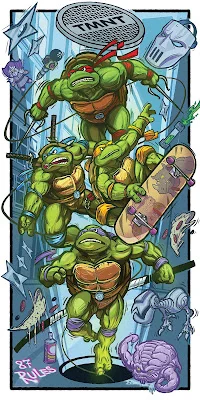
Hernan Carracedo’s “Cowabunga!” brings a distinctly arcade-like look to a Teenage Mutant Ninja Turtles art print, pairing a nod to the original cartoon with references to the Turtles’ wider world. Bottleneck Gallery describes the piece as a “love letter” to the four brothers, with Easter eggs woven into the design. For collectors, the headline details are a consistent 18-by-36-inch format and three editions with different finishes and stated quantities.
The appeal is built around a familiar mix: an era-specific animated reference, a presentation that calls to mind arcade imagery, and details intended to reward viewers who know the franchise. Those ingredients give the print a clear identity without requiring the buyer to choose between different compositions. All three editions use the same listed dimensions and print process, so the choice comes down mainly to finish, price, and how much scarcity matters to an individual collector.
That’s a useful distinction. A print can be a straightforward character image, or it can ask the viewer to spend time looking for references; Bottleneck Gallery’s description puts “Cowabunga!” in the latter camp. The announcement doesn’t identify the Easter eggs, though, so the degree to which those details land will depend on the artwork itself and the viewer’s familiarity with the Turtles’ world.
Three editions, two foil finishes
The regular edition is limited to 75 pieces and priced at $50. Two foil versions—the Rainbow Foil Variant and the Red Foil Variant—are each limited to 50 pieces and priced at $60. All three are hand-numbered fine art giclée prints, according to the release details. That makes edition size and surface treatment the clearest distinctions between the options; the listed dimensions and print process are shared.
The price difference between the regular and foil editions is $10, while each foil version has a smaller stated run. Those are concrete points for comparison, but they don’t tell the whole story of how a particular edition will look on a wall. A foil finish can change the way a print catches light, and the effect can vary with the image and viewing conditions. The source doesn’t explain how much of the artwork uses foil or how the two foil treatments differ beyond their names.
Hand-numbering gives each print an identified place within its edition, but it shouldn’t be confused with a description of paper, production method beyond the stated giclée process, or other handling details. The release information doesn’t supply those specifications. If you’re weighing the options, treat the announced details as a starting point rather than a substitute for checking the product listing and images.

The foil options give collectors a choice of finish, while their smaller stated editions set them apart numerically from the regular version. The source provides no further description of how the foil appears across the image, so collectors comparing the variants will want to consult the gallery’s product images for the visual differences. The same images can help assess how the arcade-inspired treatment and hidden references read at full scale.
Cartoon roots and visual clues
Carracedo’s design takes its cue from the original Teenage Mutant Ninja Turtles cartoon and uses an arcade-esque style. Bottleneck Gallery also points to Easter eggs drawn from the Turtles’ history and other characters in their world. That combination gives the print two familiar hooks for fans: a recognizable animated-era reference and details that reward a closer look. The announcement doesn’t name the individual Easter eggs, leaving their identification to viewers examining the artwork.
That restraint matters when assessing the release. The description establishes the intended experience, but it doesn’t confirm which characters or references appear, or how prominently they’re shown. A collector who’s buying for a specific character or visual callback shouldn’t assume it’s present based only on the broad description. Here’s the thing: the promise of hidden details is part of the pitch, but the artwork has to deliver those clues clearly enough to make a second look worthwhile.
The cartoon connection also gives the print a more specific point of reference than a general celebration of the franchise. For collectors, that may be the stronger hook: it ties the piece to a recognizable version of the Turtles while leaving room for the artist’s own interpretation. The arcade styling adds another layer, though the source doesn’t describe its exact visual elements. A closer look at the image is the best way to judge whether those ideas feel integrated or simply share the same canvas.

Format, framing, and display
At 18 by 36 inches, the print has a tall, narrow format that collectors may want to account for when planning a display. Before choosing a frame or hanging location, it’s useful to check the full product image and confirm the intended orientation and proportions. For long-term care, keep the artwork away from direct sunlight, moisture, and locations where it could be bent or scuffed. A suitable frame and stable display spot can help protect the print while keeping its details visible.
The dimensions are more than a line in a product description; they affect where the piece can fit and how it’ll sit alongside other wall art. A 36-inch side calls for a display area that can accommodate the print without crowding it, while the narrower width may make it easier to plan around other objects. That said, framing choices can change the finished footprint, so the listed print size shouldn’t be treated as the final amount of wall space required.
Collectors should also consider what the surface treatment might mean for display. The announcement doesn’t explain whether the foil versions respond differently to lighting, and it doesn’t provide paper or framing specifications. Check the gallery’s images before deciding which finish suits your space, and avoid assuming that a product image reproduces the way foil will look in person. And this is the part most people overlook: the best-looking option online may not be the one that works best under the lighting where you’ll actually hang it.
For care, the basic advice is practical rather than elaborate: protect the print from sunlight and moisture, and avoid handling or storage that could leave it bent or scuffed. A frame can provide a physical barrier, but the source doesn’t specify a recommended frame or glazing. Keep it simple. A stable location and careful handling go a long way toward preserving a print’s condition.
Sale details
All three colorways are scheduled to go on sale at 12 p.m. ET on Wednesday, August 19, through BottleneckGallery.com. The source does not specify a year, shipping details, paper stock, or whether unsold pieces will be offered later, so those points shouldn’t be assumed from the edition information alone. Interested collectors can compare the three listed options by price, finish, and edition size, then check Bottleneck Gallery’s listing for any additional product details.
The sale information gives a time and date, but it leaves practical questions unanswered. There’s no stated shipping cost or delivery estimate, and the announcement doesn’t say how long the editions will remain available. Those details may be clarified on the product page, but they aren’t established by the information here. If you’re planning to choose a version, it’s sensible to review the listing before the sale rather than rely on assumptions about availability or fulfillment.
What the release means for collectors
Carracedo’s “Cowabunga!” combines a defined cartoon reference, an arcade-style approach, and a trio of clearly differentiated editions. The regular version has the largest stated quantity, while each foil variant is limited to 50. For fans weighing which version best suits their collection, the finish and the artwork’s Easter eggs are the details to inspect before the scheduled sale.
This is more significant than it looks for collectors deciding between versions: the basic facts are clear, but the most subjective difference—the visual effect of each finish—needs to be judged from the artwork rather than the edition counts. The smaller foil runs may appeal to buyers who prefer a more limited option, while the regular edition costs less and has the larger stated quantity. Neither detail, by itself, says which print will be more satisfying to own. That comes down to the image, the finish, and how well the piece fits a collection.
The release’s strongest selling points are specific rather than broad: the cartoon reference, the arcade-like treatment, the hidden details, and the choice between regular and foil editions. The gaps in the announcement are just as useful to recognize. Paper stock, shipping, and the exact appearance of the foil aren’t described, so collectors should check the gallery’s listing and inspect the product images before settling on a version.