Thursday, October 22, 2026 · Toys & Action Figures
Martha Boers’ Armored Dolls Bring a Storybook Kingdom to Life
Noted by Richard Williams · 857 reads
Award-winning Canadian doll artist Martha Boers photographs her ball-jointed and artist dolls in flowing capes and an imagined castle setting.
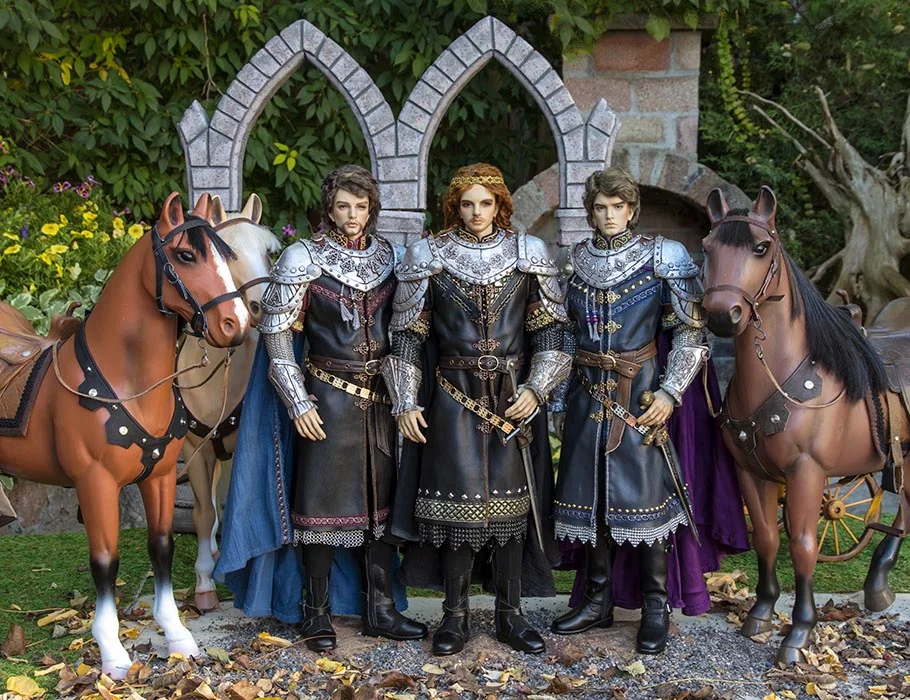
The scene has its own quiet pageantry: armored figures stand before arches on the grounds of an imagined kingdom, their capes trailing behind them. For doll artist Martha Boers, that combination of costume, pose and setting gives each figure a sense of character before a story even begins.
Costume and setting shape the scene
Boers is drawn to the way a cape moves around an armored doll. The fabric adds a softer line to the hard surfaces and structured shapes of the costume, while its sweep can suggest motion in an otherwise still pose. Whether “cape” is the precise term for every garment in the scene is a question she raises with a light touch; the visual effect is what holds her attention.
The arches behind the figures do more than fill the background. They imply an architectural setting and give the dolls a place within a larger imagined world. A portrait against a plain backdrop can focus attention on a doll’s face and clothing. Here, the stonework and the figures’ placement invite a different reading: these characters seem to have arrived somewhere, or to be waiting for what comes next.
That sense of context is one of the pleasures of photographing dolls as characters rather than treating them only as objects on display. A pose, a backdrop and a carefully chosen garment can suggest relationships and a setting without spelling out a full plot. The viewer supplies part of the story.
A collector’s eye behind the camera
Boers is an award-winning Canadian doll artist and costumer. She also photographs dolls and creates stories featuring her extensive collection of ball-jointed and artist dolls. Those interests meet in these kingdom scenes: costume offers the visual detail, photography arranges it for the viewer, and storytelling gives the composition room to hint at a world beyond the frame.
Ball-jointed dolls are especially suited to expressive staging because their articulated construction allows collectors and artists to work with pose. The position of the head, arms and hands can change the mood of a figure, while the angle of the body can make the same costume feel formal, relaxed or in motion. In a photograph, those choices become part of the image’s meaning. The source scene offers no catalog details or maker names for the armored dolls, so the emphasis remains on Boers’ response to their appearance and presentation.
Costume contributes another layer. Armor establishes a strong silhouette, and a cape brings contrast in shape and drape. The eye can move from the structured outfit to the flowing fabric, then outward to the arches and the setting. That visual path helps a viewer take in the scene as a small narrative rather than as a simple inventory of clothing and accessories.
Why the photographs invite a closer look
For collectors, images like these can be rewarding records of how a doll’s styling works as a whole. They preserve choices about pose, costume and setting, and they show how a figure can be presented in a particular mood. A photograph can also make details easier to notice: how fabric falls, how the costume frames the face, or how an architectural backdrop changes the apparent scale of the scene.
Boers’ description focuses on the emotional and visual appeal of the figures rather than on technical specifications. There are no stated production dates, editions, sculptors, materials or condition notes for the dolls in the source. That leaves the photographs’ storytelling qualities at the center. For a collector, those details would matter when identifying a specific doll; for this scene, the striking points are the handsome armored figures, the flowing capes and the arches that place them in a storybook realm.
The composition’s strength lies in that balance between display and suggestion. The figures are arranged with care, but the scene still feels open to interpretation. A collector can admire the costuming, while another viewer might imagine a meeting, a journey or a pause in a larger tale. Boers’ work brings those possibilities together through dolls she collects, costumes she understands and photographs that give each character a setting.
To see more of Martha Boers’ doll work, visit the related feature on her antique lilac project. The armored figures leave a clear takeaway: costume and setting can turn a carefully posed doll into the opening image of a story.


