Monday, September 28, 2026 · Coins & Currency
1920s Art Deco Home Décor: Key Features and Vintage Styling Ideas
Noted by America's Antique Mall · 596 reads
Geometric forms, rich materials and bold color define Art Deco. Learn what to look for in vintage pieces and how to bring the style home.
Why Art Deco still catches the eye
Art Deco gives a room its sense of occasion through shape, scale and surface. Its furniture and décor can be bold without relying on clutter: a sunburst mirror, a polished metal lamp or a large cabinet can carry the look on its own. For collectors, the appeal also lies in recognizing how the style’s geometric lines and luxurious finishes distinguish it from earlier decorative movements.
Popularized in Europe during the 1920s and 1930s, Art Deco spread to the United States after World War I. It appeared across clothing, art, architecture and interiors, bringing brighter colors and richer materials into design. Today, its renewed presence in interiors, architecture and fashion seems less about recreating the past than making space for glamour and visual drama.
Art Deco and Art Nouveau: different design languages
The similar names can cause confusion, but the styles have distinct signatures. Art Nouveau, popular from the late 19th century into the early 20th, drew on nature. Flowing lines, asymmetry, mosaic-like patterns and romantic imagery give it a softer, more organic character.
Art Deco, by comparison, favors clean geometry, vivid color and a more structured finish. Some experts view it as a response to Art Nouveau’s handcrafted approach. Designers embraced industrial methods and modern materials such as steel, creating pieces that reflected the period’s interest in technology and speed. A vintage clock, for example, may offer a useful starting point for spotting the contrast between ornate curves and crisp, geometric forms.

Recognizing the style in vintage pieces
Art Deco pieces often combine several traits rather than relying on one defining detail. Look for symmetrical patterns, streamlined shapes, dramatic proportions and a polished finish. A piece’s materials and construction can add useful clues, but a style label alone doesn’t establish age or authenticity. When assessing a potential find, consider its overall design alongside its condition, craftsmanship and any maker’s mark.
Geometric motifs are among the clearest visual cues. Zigzags, chevrons, sunbursts, rays, ziggurats, fanned leaves and polygons appear across furniture and decorative objects. Their repetition and symmetry connect the style to the era’s fascination with industrial design, automobiles and skyscrapers.

Materials help establish the impression of luxury. The period’s designers used expensive woods, striking stones and sleek metals, including stainless steel, nickel silver and chrome plating. Mirror elements, etched details and layered lacquer added reflective surfaces and depth. Furniture described as Art Deco may feature ebony, mahogany or rosewood, sometimes with inlays of marble, bone, ivory or mother-of-pearl.

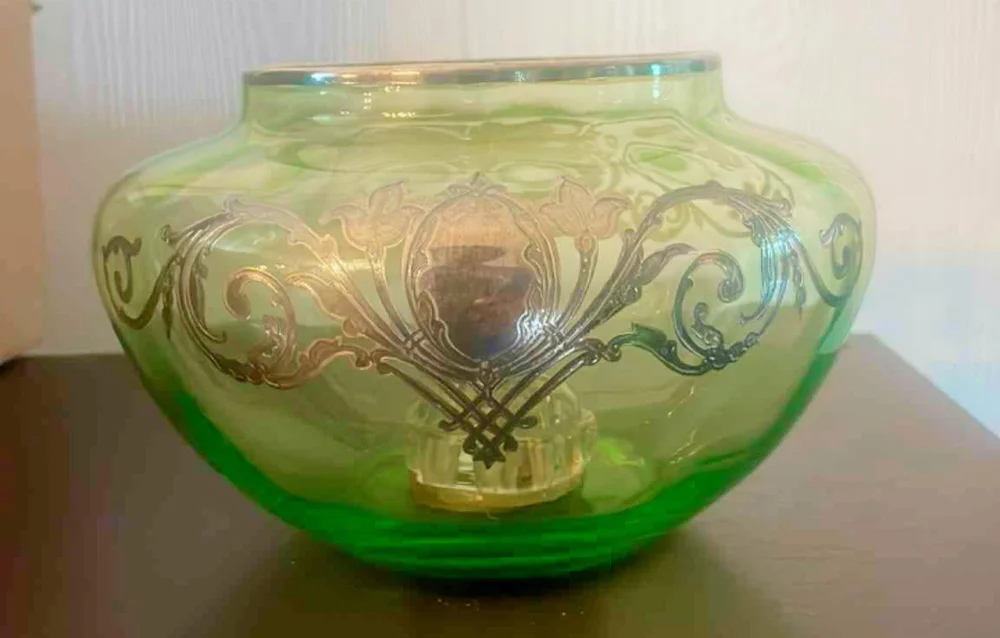
Color is another strong identifier. Designers paired saturated jewel tones, such as emerald green, deep yellow, ruby red and rich purple, with high-contrast neutrals like black, white, beige and cream. Gold, brass, silver and chrome accents contribute the characteristic gleam. A black-and-white object with a metallic finish can suggest the palette, while more colorful pieces may bring the jewel tones forward.
Scale matters, too. Bookcases, dining tables and bedframes were often designed as oversized statement pieces, with pronounced vertical lines and streamlined forms. Their size can help a room feel grand, though scale alone doesn’t confirm a piece’s age. Check its construction and materials as well as its proportions.
Textiles add softness and sheen to the otherwise structured look. Satin, silk, suede and velvet suit upholstery and decorative accents. For more structured uses, designers also turned to linen, cotton canvas, organza, brocade and jacquard. Combining these surfaces can make an interior feel layered without losing the style’s strong lines.
Lighting and artwork that complete a room
Lighting is a practical way to bring Art Deco forms into a space. Look for streamlined fixtures such as floor lamps with geometric bowls, glass-and-metal wall sconces and chandeliers with sunburst motifs. Their shapes can echo the patterns in furniture or wall décor while adding a focal point at eye level or overhead.

Wall art can help tie a room together. Vintage paintings, prints and magazine covers offer period imagery and graphic design, while the work of notable artists provides a useful collecting focus. Tamara de Lempicka, a Polish painter, is associated with Cubism, sensual female figures and abstract geometric designs. René Lalique is known for glassware décor and is often called the “father of Art Deco.” Russian-born artist Erté became known for magazine covers for Harper’s Bazaar and theatrical designs.
Authentic period art can bring the room’s furniture and accessories into conversation with one another. When selecting a piece, consider how its colors and shapes relate to the rest of the room, as well as its condition and any information available about its maker.
What affects the price of an antique piece?
There isn’t one price rule for antique Art Deco. The designer, materials, craftsmanship, rarity and condition all influence what a piece may sell for. Furniture made from fine materials, marked by a recognizable maker and found in strong condition may command thousands of dollars. More common pieces with visible wear may sell for $50 to a few hundred, according to the source article’s examples.
Those figures are broad examples, not a guide to the current value of any particular item. A less expensive piece can still be a worthwhile find for someone who appreciates its design or plans to have it professionally refurbished. Before buying, inspect the item carefully and weigh its condition and construction against the asking price.

Finding vintage Art Deco
Online auction sites can be helpful places to browse and learn about the period. An antique mall offers a different experience: you can examine surfaces, materials and scale in person, and compare pieces from different vendors. Wherever you shop, take time to look closely at finishes, wear, joinery and marks before deciding whether an item suits your collection or home.

Styling Art Deco at home
You don’t need to furnish an entire home in period pieces to make the style work. Start with a few strong accents, then build around their shapes and finishes. A dining-room furniture set, an antique loveseat or a vintage painting in a gallery wall can establish the mood without requiring a full renovation.

Mixing textures helps the room feel rich and inviting. Velvet, silk and faux fur can sit alongside woven materials such as wicker. Small objects matter as well: a silver ashtray on a coffee table, a cast iron doorstop near a laundry room or a crystal bowl on a bathroom counter can carry the style into everyday spaces. Family heirlooms and other collectibles can share those arrangements.
A consistent palette keeps different objects from competing. Choose one or two jewel tones, then balance them with neutrals. Metallic accents can pick up the shine of a lamp or frame. This approach also offers a way to evoke the period through textiles and décor, without making every purchase a large furniture piece.

Finally, leave room for scale. A large cabinet, artwork or mirror can make a stronger impression than many small ornaments. Give statement pieces enough space to show their lines, and let their colors and materials guide the rest of the room. The most convincing Art Deco interiors bring geometry, texture and a few carefully chosen vintage finds into balance.