Tuesday, September 15, 2026 · Toys & Action Figures
October 2026 Toy Farmer Issue Is Online
Noted by Michael Johnson · 725 reads
The October 2026 Toy Farmer issue is online, but the supplied page contains only category and archive links, with no article details.
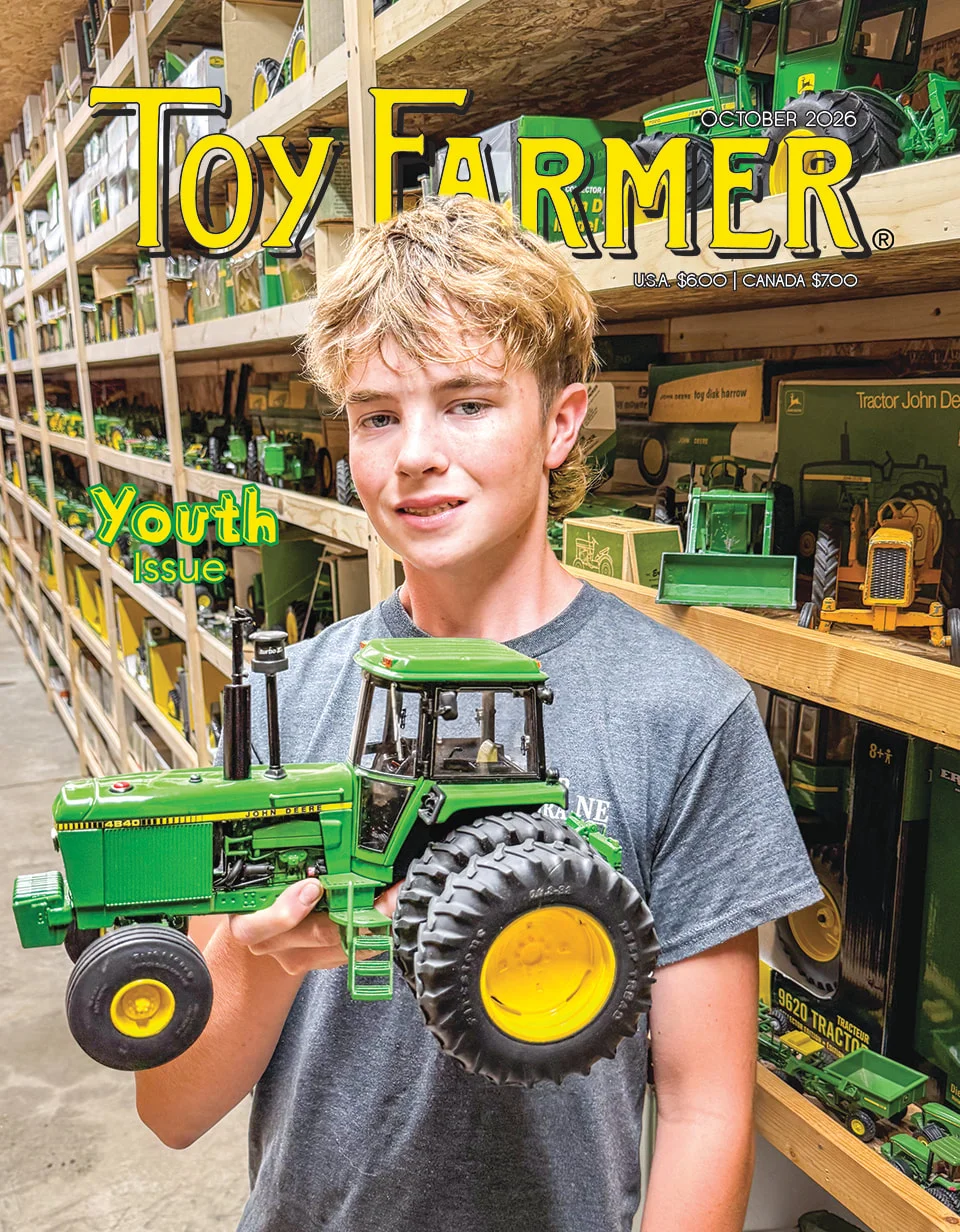
The supplied headline identifies the October 2026 Toy Farmer issue as online, but the page content doesn’t show what’s inside it. Instead, it consists of navigation: a long directory of categories followed by a monthly archive index. There are no issue contents, featured models, collector profiles, release reports, or other article details to inspect. That gap matters. A headline can point readers toward an issue, but the page itself doesn’t confirm what the issue covers.
What the page shows
The category directory covers a broad range of farm toy and model interests, including scale models, tractors, implements, dioramas, scratch-built projects, collections, shows, and museums. Its labels include 1:16 Scale, 1/32 Scale Big Iron, and 1/87 Scale Art, alongside names such as John Deere, Allis-Chalmers, Case, Farmall, Massey-Ferguson, Minneapolis-Moline, Rumely, and New Holland. Other entries point to custom models, pedal tractors, working models, display contests, and vintage equipment. That’s a substantial menu of subjects to browse, but a menu isn’t an issue guide.
For collectors, category labels can help locate material across a site. They signal the kinds of subjects the publication makes available to readers, and they may offer a useful route into older coverage or recurring interests. But the labels don’t say whether any one subject appears in the October 2026 issue. There are no attached descriptions, article links, or summaries connecting a category to a specific piece from that issue. If you’re looking for a particular tractor, maker, or model feature, the directory can suggest where to search, but it can’t confirm that you’ll find it there.
This distinction is easy to miss when a page sits beneath a clear issue headline. The headline supplies a subject and a month; the body supplies site navigation. Those are different kinds of information. This is more significant than it looks: a reader could otherwise mistake the breadth of the site’s categories for a preview of the issue’s contents. The page doesn’t support that reading.
Archive index runs through October 2026
A separate index links to monthly archives, beginning with October 2026 and extending back to July 2014. The sequence includes every month from January 2015 onward, while the entries shown for 2026 run from January through October. That arrangement makes the publication’s available history browsable by month, which can help readers navigate older material when they already know roughly when it appeared. It doesn’t, by itself, identify what any archive contains.
An archive label is a signpost, not a table of contents. It tells the reader which month to open, but the supplied page offers no summaries that would make the contents clear in advance. And yet, the index still has practical value: it establishes that the site organizes its archive by month and that October 2026 appears as the latest month shown in this listing. What it can’t establish is whether the linked archive contains a full issue, selected articles, or some other format. The page gives no explanation of that.
The archive’s long span may encourage readers to look for older coverage of a maker, scale, or type of farm toy. But no article titles or descriptions appear here to support a targeted search from the page alone. A collector would have to open the relevant archive or locate another page with article-level information. (And this is the part most people overlook.) A date range can show the reach of an index without telling you how much useful detail sits behind each entry.
What collectors can confirm
The headline identifies the October 2026 Toy Farmer issue as online. The page confirms that the site has a wide category directory and a monthly archive list that runs back to July 2014. It doesn’t identify a specific model, manufacturer, contributor, feature, or product announcement associated with the October issue. For those details, readers need the issue itself or a page that contains its articles.
That’s a narrow but clear finding. The site’s subject categories show the breadth of topics readers can browse, while the archive index offers a way to move through months of material. Neither element serves as evidence of what a particular issue contains. The numbers here are underwhelming as an issue preview: there’s a month label, but no article-level substance.
Why the distinction matters
For collectors, the difference between a subject directory and an issue preview affects how efficiently they can find information. Someone checking for a new release, scale, maker, edition, or availability needs details tied to a specific item or article. Broad categories can provide useful context once that material is available, but they can’t answer those questions on their own. The supplied page offers no specifications or release information to assess.
What this means for you is straightforward: treat the October 2026 label as evidence that the issue is listed online, and treat the rest of the page as navigation. The page doesn’t support stronger claims about the issue’s contents. If the goal is to confirm a feature or product announcement, the next useful source is the issue itself or an article page with a title and description. Until then, the contents remain unconfirmed. No more than that.