Tuesday, September 29, 2026 · Stamps & Postal History
McFarlane Super Powers Starfire Figure Brings the Teen Titan to Series 14
Noted by Ethan Wilson · 876 reads
Numbered 68, McFarlane’s Starfire pairs a flowing Perez-inspired head sculpt with the line’s newer female body and clean paintwork.
A long-awaited Teen Titan joins the lineup
“As brilliant as the sun from which she derives her powers, Koriand’r of Tamaran has refused to let the torments she’s suffered crush her spirit.”
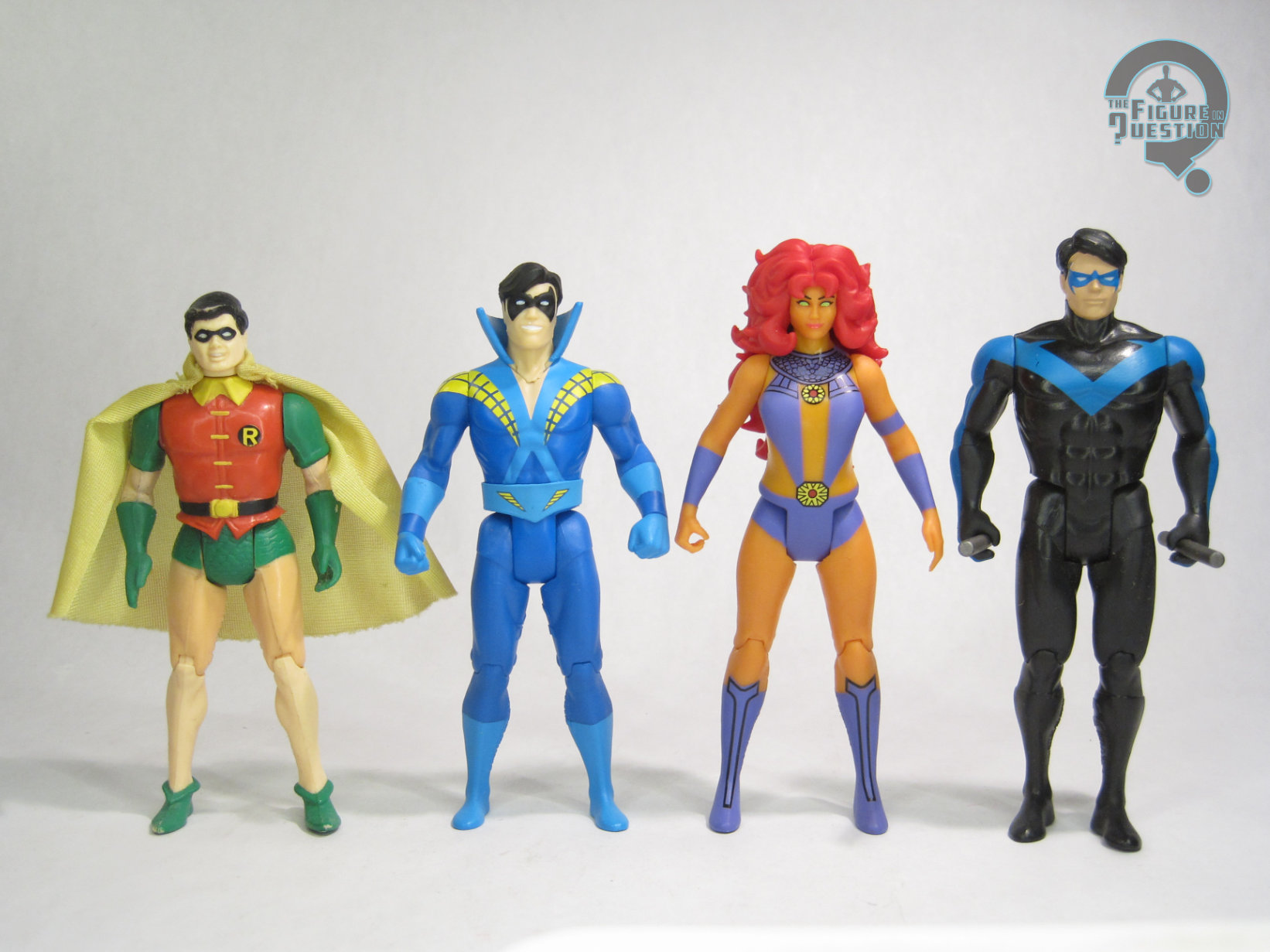
Starfire’s arrival gives McFarlane’s Super Powers continuation a third Teen Titan, a small but welcome expansion for a line that has so far returned to the team only intermittently. Robin was part of Kenner’s original run from the beginning, while Cyborg arrived near its end in a release that collectors have found especially difficult to track down. McFarlane has revisited Dick Grayson in several forms and updated Cyborg; now Koriand’r of Tamaran brings a different look and character to the roster.
That makes this release notable beyond the appeal of Starfire herself. The original Kenner line barely explored the Teen Titans, despite the team’s importance to DC comics of the period. Starfire wasn’t included in Kenner’s lineup, but she’s a natural fit for a continuation that draws on the era’s comic designs. Her presence also gives the growing group of Titans figures more visual variety.
The figure itself
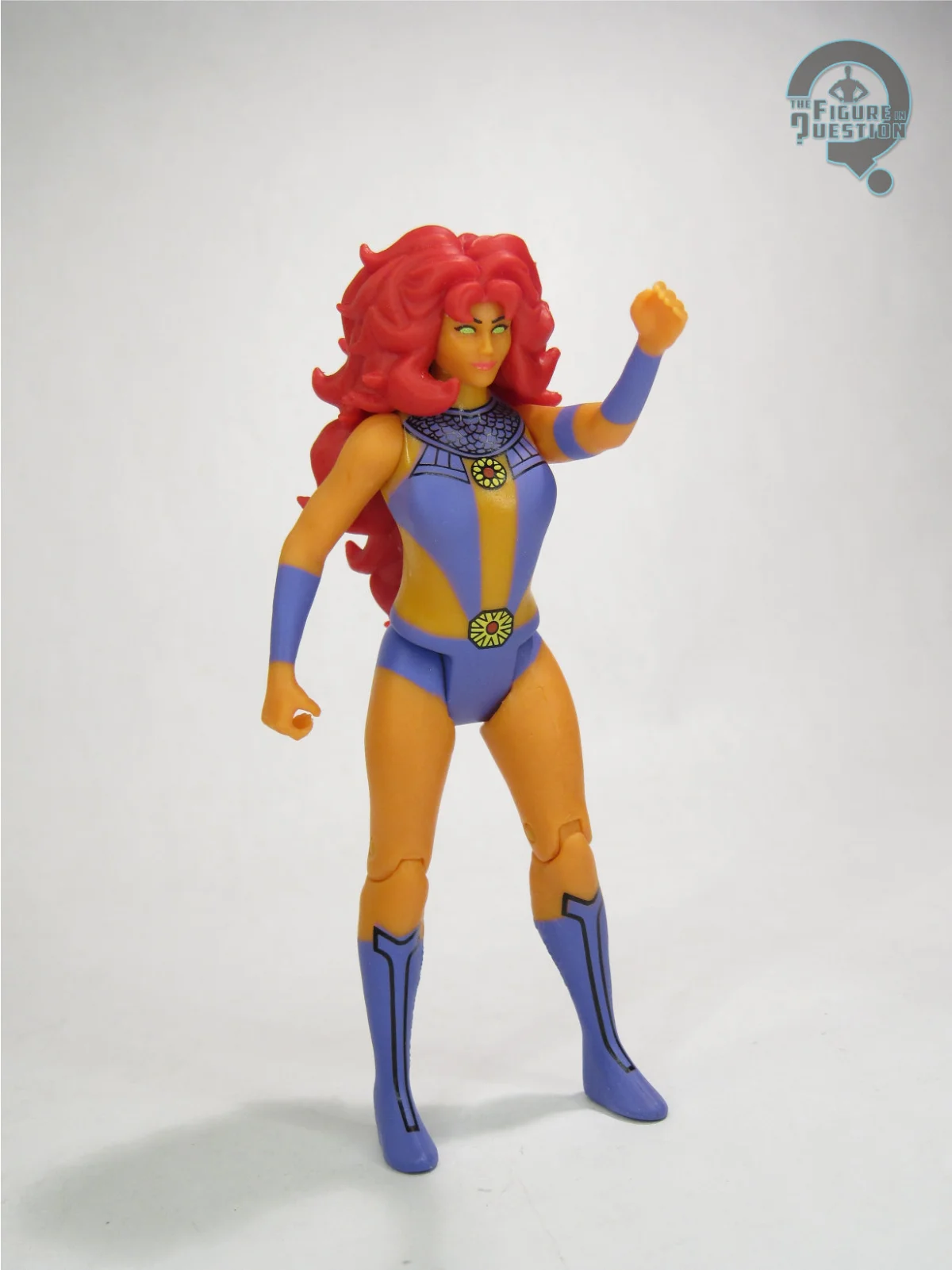
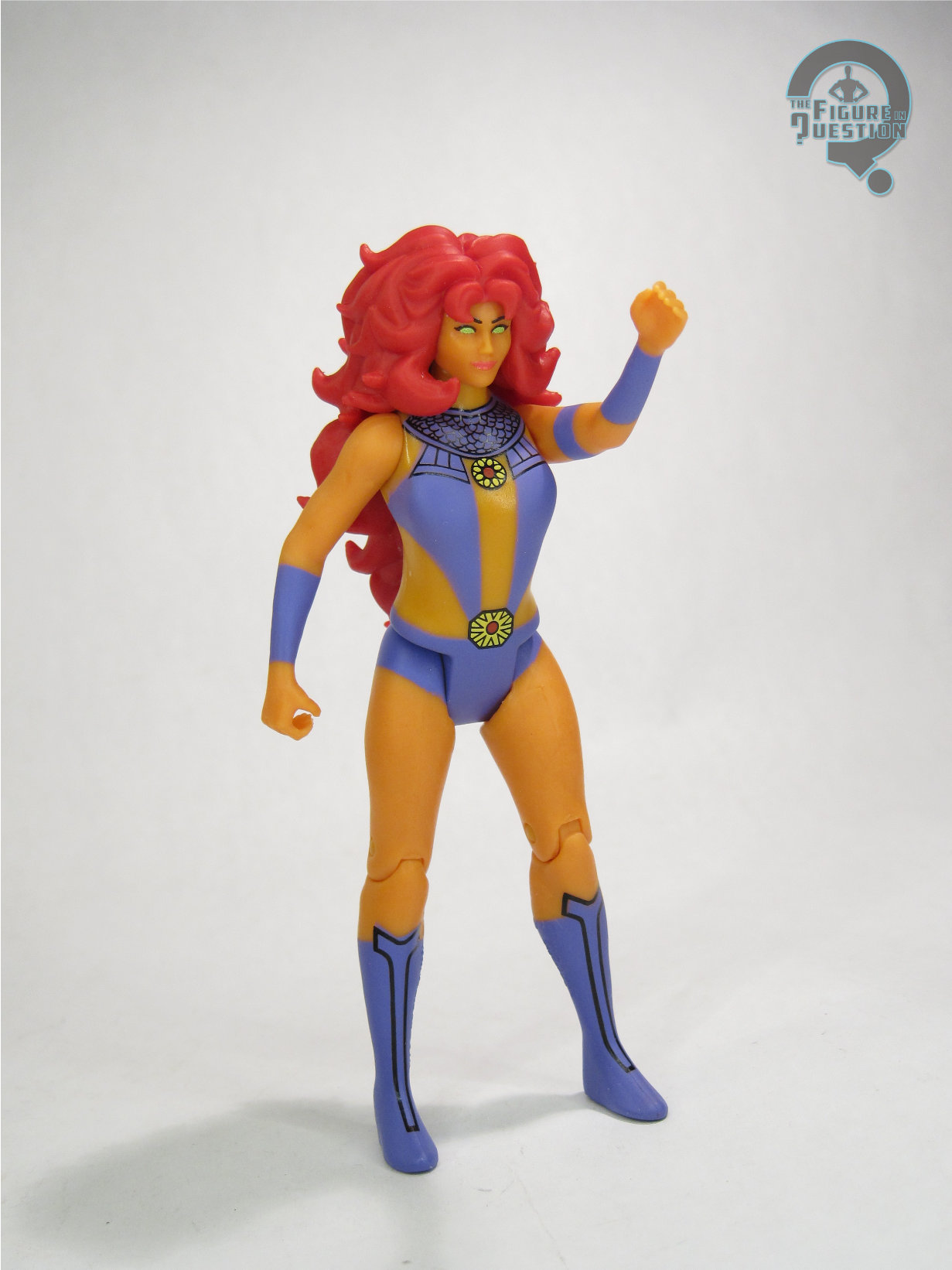
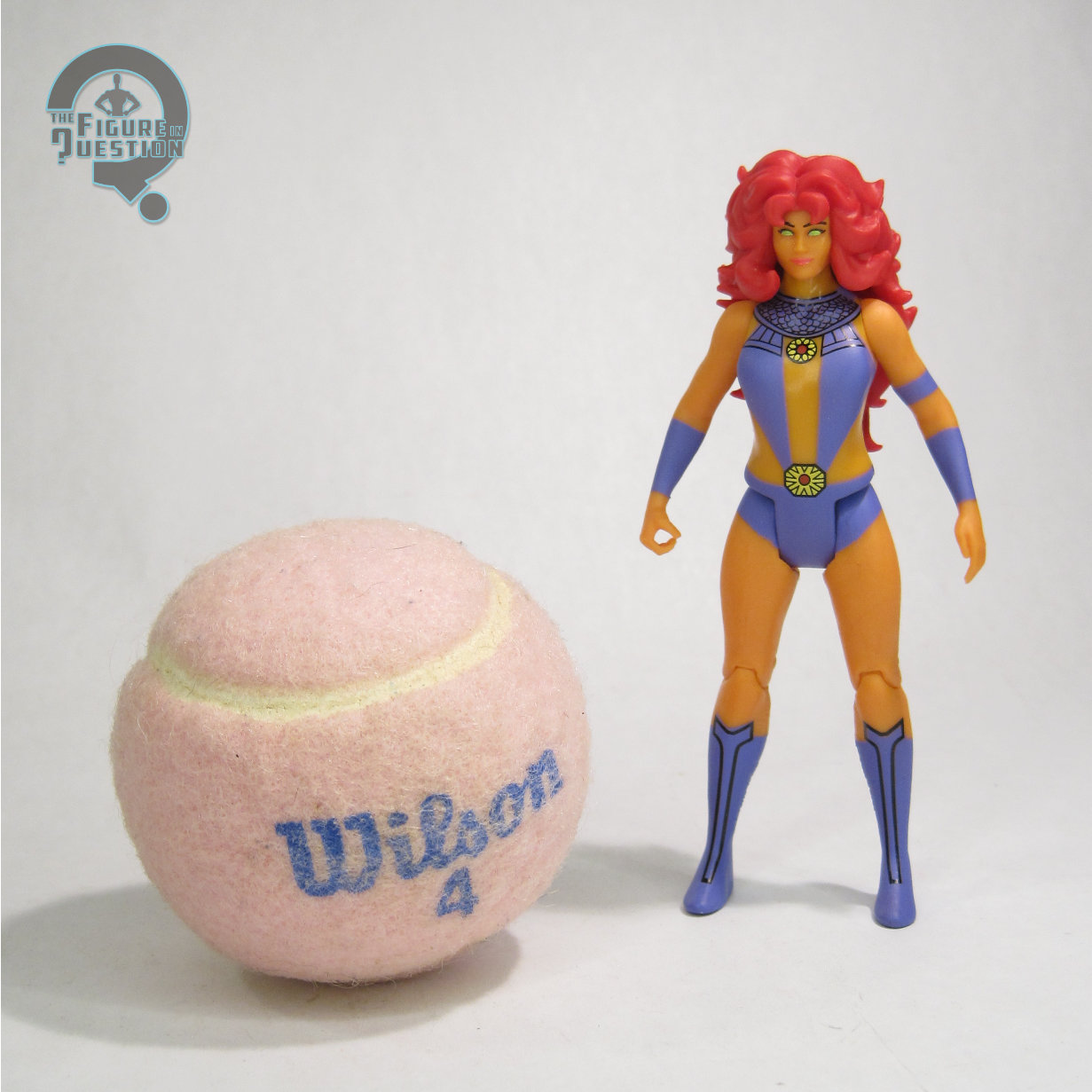 Starfire is the second figure in Series 14 of McFarlane’s Super Powers continuation and carries number 68. She wears her original George Pérez design, a strong match for the line’s compact, simplified style. The figure stands just under 4 3/4 inches tall and has 7 points of articulation.
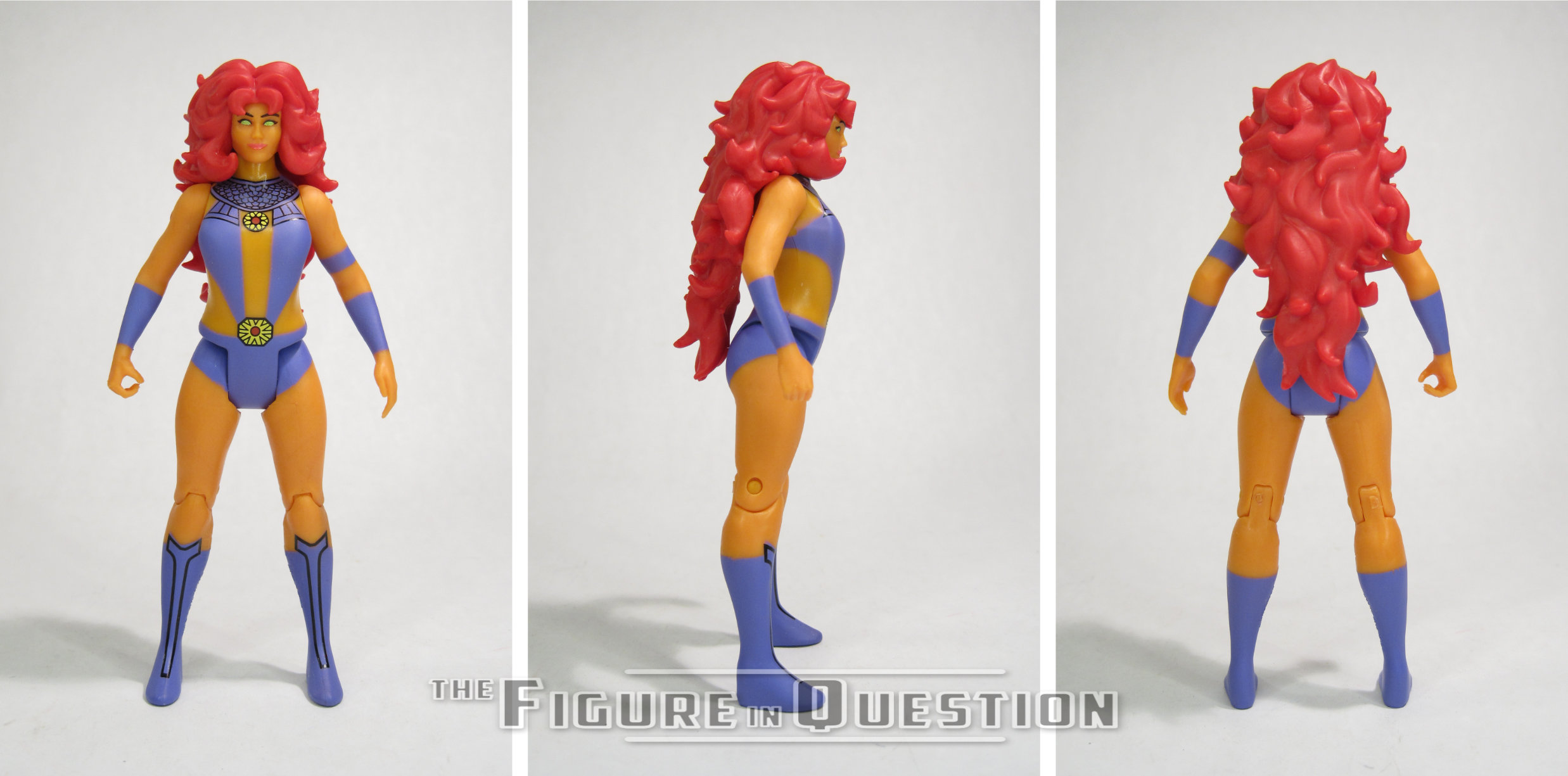
Her head sculpt is the standout. It suggests how Kenner might have interpreted Starfire while retaining enough of Pérez’s distinctive design to make the character recognizable. The sculpt also fits the visual language of the original Super Powers figures, which leaned on José Luis García-López’s designs. That balance between comic detail and toy-like simplicity is a large part of why she looks at home in the range.
The hair makes a bold impression without overwhelming the sculpt. Its volume gives Starfire a strong silhouette, while the flowing shape adds movement. The sculpt keeps the strands somewhat simplified, so the hair still feels consistent with a figure built for this particular line. Its size does have a practical effect: it limits how far the neck can move and can make the figure a little harder to balance upright. Collectors displaying her standing may need to take a moment to find a stable position.
For the body, McFarlane uses the newer female base, built from the updated Wonder Woman mold and previously used for Supergirl and Power Girl. Starfire gets a new head, but the rest of the figure relies on that shared body. Her outfit is therefore communicated mainly through paint instead of separate raised sculpted details. A dedicated body sculpt could have captured the costume more fully, but the existing parts provide a workable foundation.
The shared torso is shaped like a clothed body, which creates a small mismatch with Starfire’s classic outfit. There’s little definition beneath the top, even though the original design calls for it. The placement of the painted costume lines helps the torso read correctly at a glance, and the effect is less distracting than on the DCUC Starfire. Within the limits of the available body parts, the design holds together.
Paint carries much of the costume’s detail, and the chosen shades suit the character. The lines that are present look crisp and controlled. Coverage is uneven, though: some areas of the outfit receive painted definition while others don’t. More complete line work would have given the costume a clearer finish, but the colors and clean application still make a good impression.
How she fits the collection
Starfire was the most anticipated figure in this particular set for the reviewer, especially after McFarlane’s female base body entered the lineup. She’s a character who benefits from a purpose-built costume sculpt, and a future version with the outfit raised from the torso could better capture the classic design. Still, the current figure makes good use of the shared body, and the head sculpt does much of the character work.
For collectors building a shelf around the original Super Powers look, Starfire’s appeal lies in how closely her design fits the line’s visual approach. She brings the Teen Titans count to three in McFarlane’s continuation, while adding a Pérez-inspired character who wasn’t part of Kenner’s original roster. Her hair and limited neck movement are worth considering when posing her, but the sculpt, palette and recognizable silhouette make number 68 a fitting addition.