Friday, July 3, 2026 · Toys & Action Figures
Schleich Shadow Lemur Review: A Crouching Eldrador Forest Creature
Noted by suspsy · 498 reads
Schleich’s Shadow Lemur pairs an aye-aye-inspired sculpt with jagged back spikes, red eyes and a low, reaching pose.
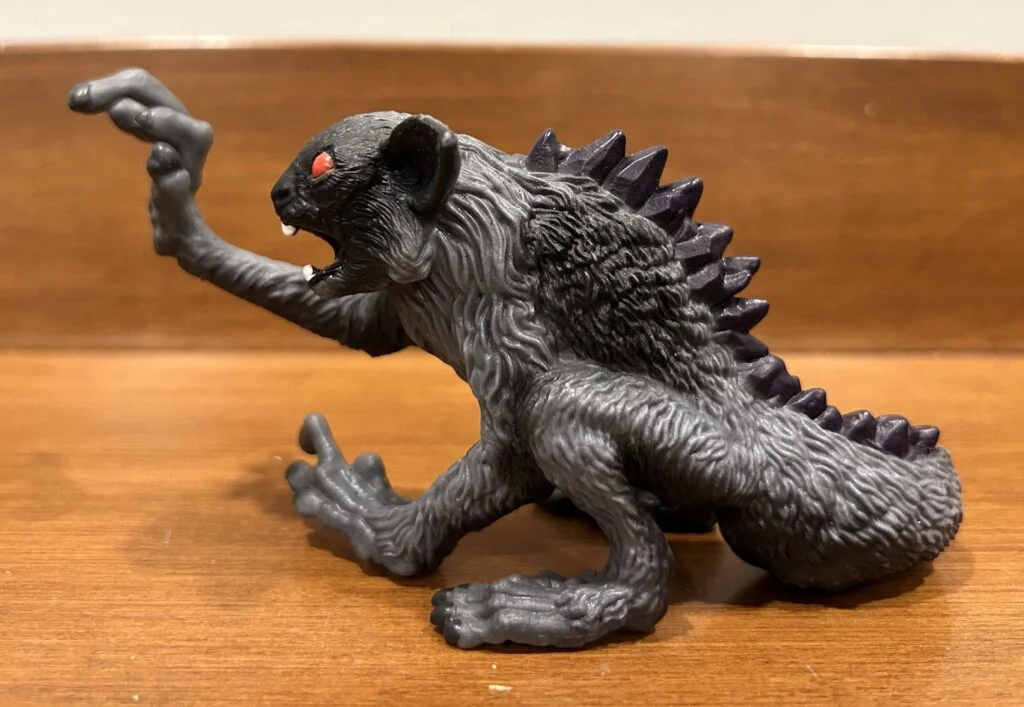
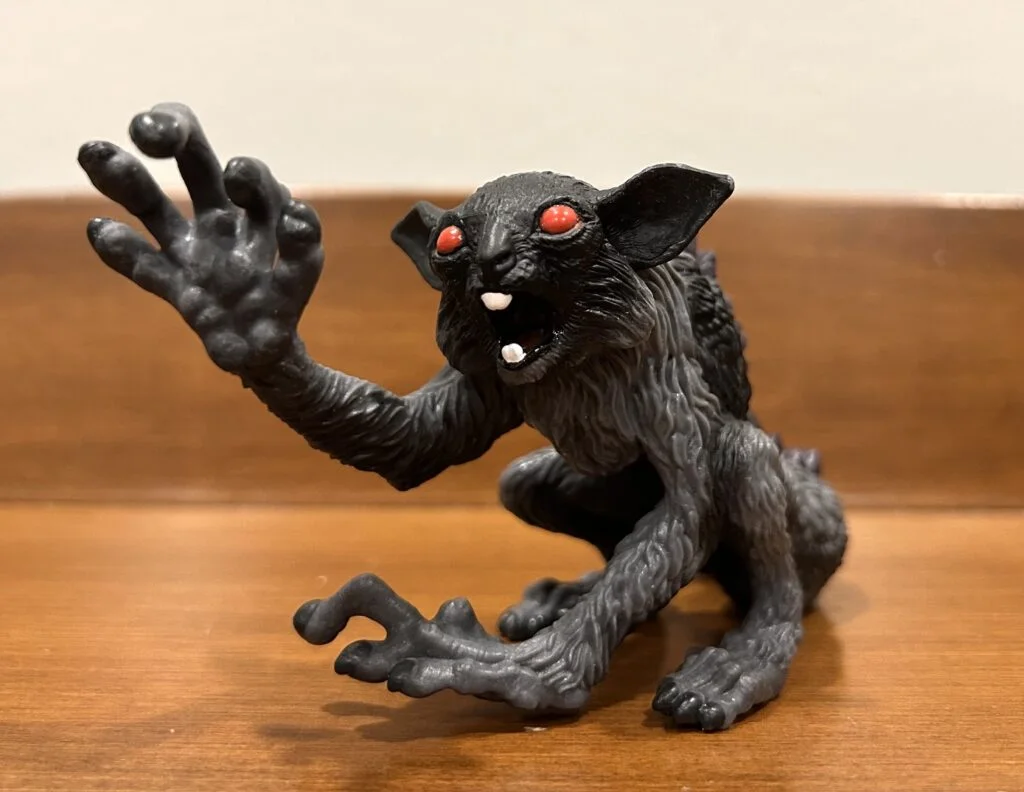
Schleich’s Shadow Lemur makes its character clear through pose and sculpt: it crouches low, reaches forward with one hand, and fixes its wide-eyed face on something just out of view. The design takes cues from the aye-aye, then pushes them toward fantasy horror with dark colors, jagged spikes and an open-mouthed expression. It’s a memorable small addition to the Eldrador Shadow Kingdom’s creature lineup.
Pose and proportions
The figure is arranged in a compact, alert stance. Its tail curves off to the right, while the left hand touches the ground to support the body. That supporting arm looks warped on the reviewed example, a visible flaw in a pose that depends on the hand meeting the ground naturally. The other arm reaches outward, as if the lemur is about to grab at something beyond the figure’s space.
The head turns slightly to the left. Its mouth is open, showing white teeth and giving the face a tense, predatory look. That expression works with the crouch: the toy seems to be watching and preparing to move, rather than simply standing for display. From the fingertips to the tail’s curve, it measures 14 cm, and it stands just under 7 cm tall. Those dimensions make the figure long and low, with the tail adding much of its visual reach.
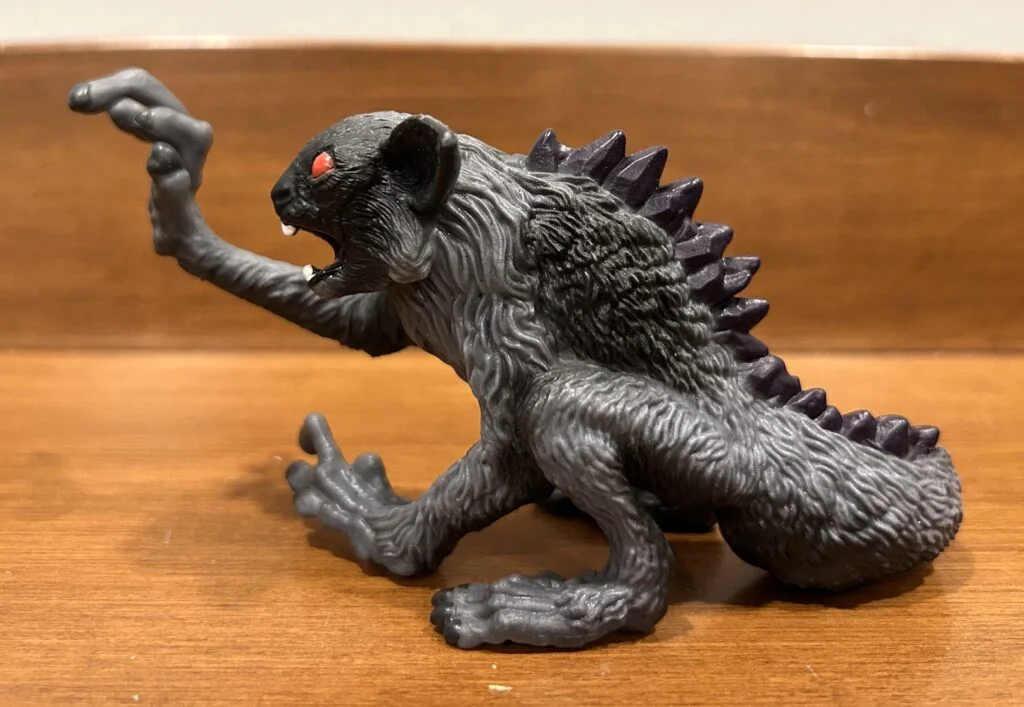
The long limbs, bushy tail, broad head and oversized ears give the silhouette its aye-aye inspiration. Its fingers vary in length, with especially long, crooked third fingers. That choice makes the hands look uncanny, but it differs from the real animal’s slender third fingers, which it uses to find grubs in tree bark. The distinction helps show where Schleich’s animal reference ends and the fantasy creature begins.
Color and surface detail
Dark grey covers most of the body, with black on the face, flanks and underside. The hands and feet have black nails, while the eyes stand out in red. Dark purple fills the mouth, which is edged in glossy black, and the teeth are white. A line of very dark purple spikes runs down the back and continues onto part of the tail.
Those color choices keep the figure close to its Shadow Kingdom setting. The red eyes and pale teeth provide the strongest contrast against the nearly black face, drawing attention to the expression. The spikes add a second focal line, guiding the eye from the shoulders along the back and tail. They resemble uneven, jagged crystals, described in the source review as amethyst-like.
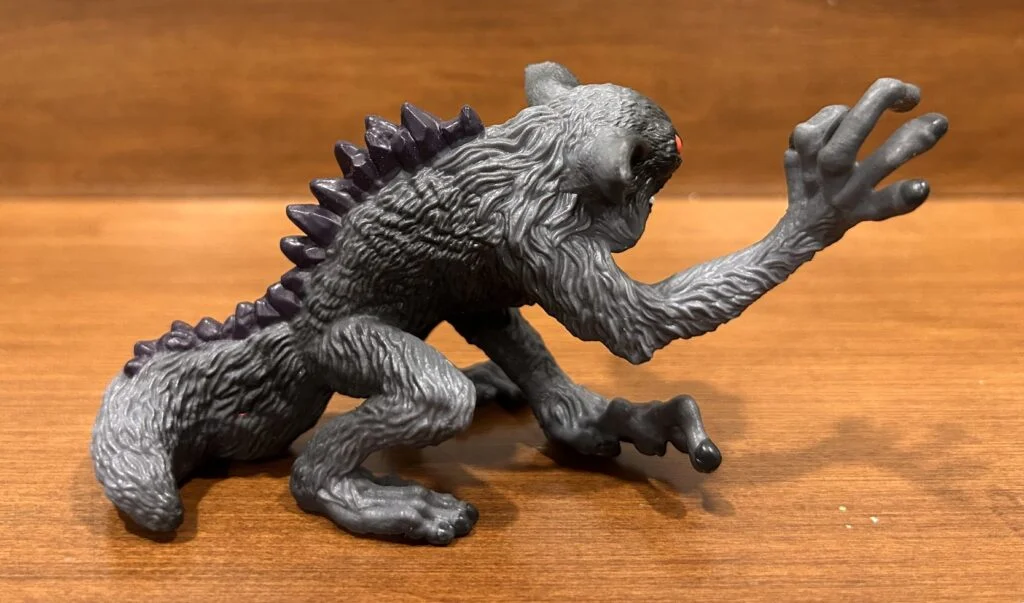
The sculpt gives the body a thick, shaggy texture, and the palms and soles have a rough, calloused finish. These small surface details help the creature read as an animal beneath the fantasy additions. The spikes are integrated into the silhouette rather than treated as smooth, regular plates, so the back looks more irregular and wild.
The spikes are opaque, as are the other parts described here. The review notes that small Eldrador figures lack translucent pieces; on this lemur, translucent purple spikes might have added another visual effect. As made, the dark coloring keeps the figure cohesive, while the sculpted texture does much of the work of separating its features.
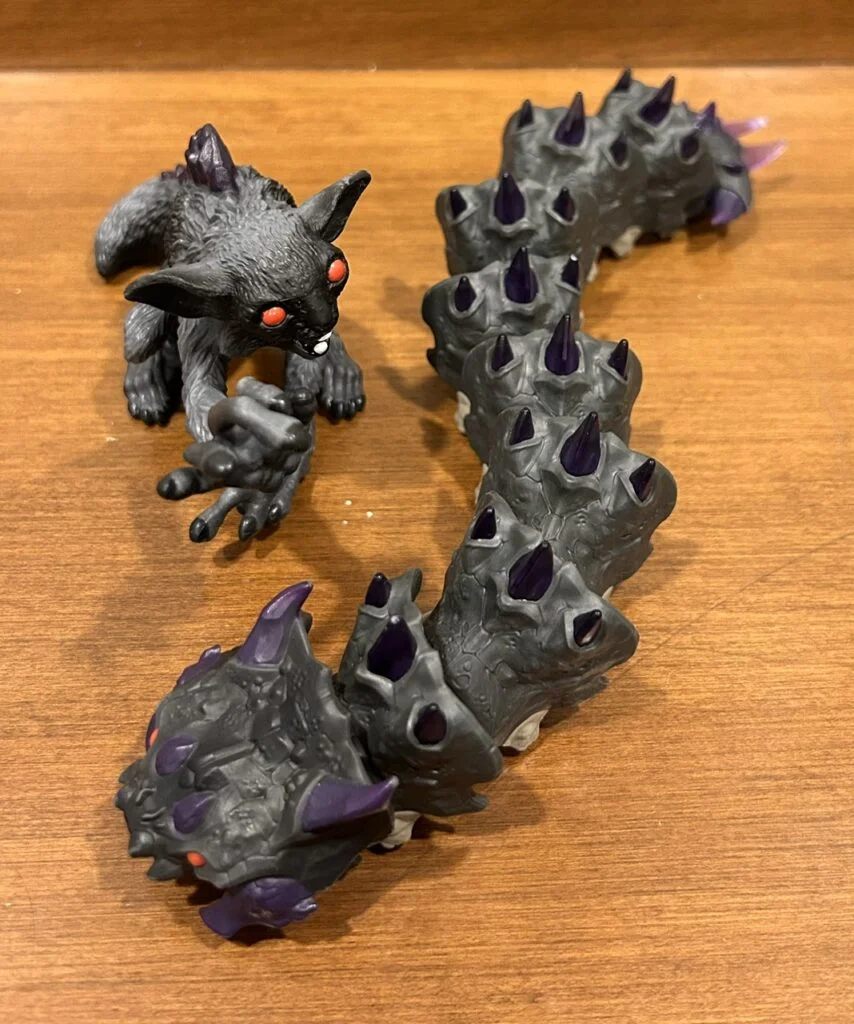
Aye-aye inspiration, fantasy treatment
The aye-aye is a nocturnal lemur with a distinctive appearance, including large eyes and ears, long limbs, and a bushy tail. The source review points out that the animal has had an unfair reputation as an evil creature among some native people. Schleich’s version leans into that spooky association through its expression and exaggerated proportions, while the added spikes firmly place it in fantasy.
That transformation is the figure’s central appeal. An animal that isn’t naturally a conventional monster becomes an unsettling character through a hunched pose, crooked fingers and a face that looks ready to bite. The design feels at home among Eldrador’s darker creatures without losing the recognizable aye-aye features that anchor it.
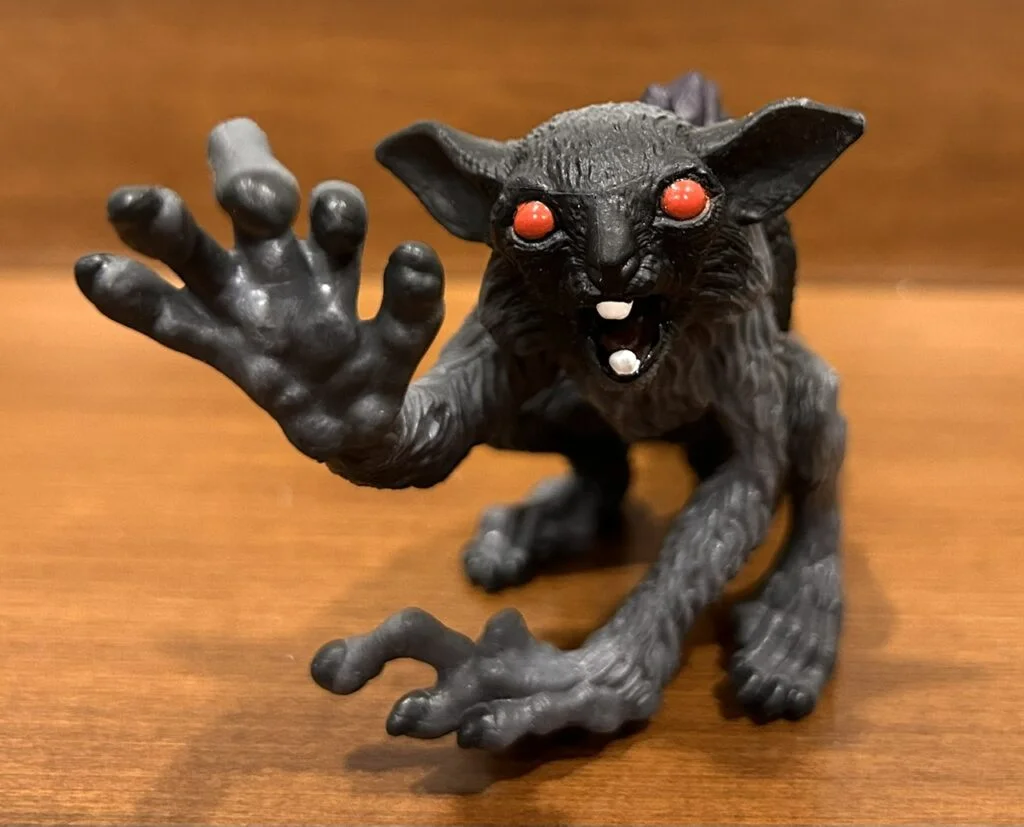
The long third fingers are particularly effective as a fantasy detail. They’re exaggerated enough to look strange at a glance, but they also echo the aye-aye’s unusual hands. The head carries the same balance: its short snout and oversized eyes and ears suggest the source animal, while the open mouth and sharp teeth make the expression more threatening.
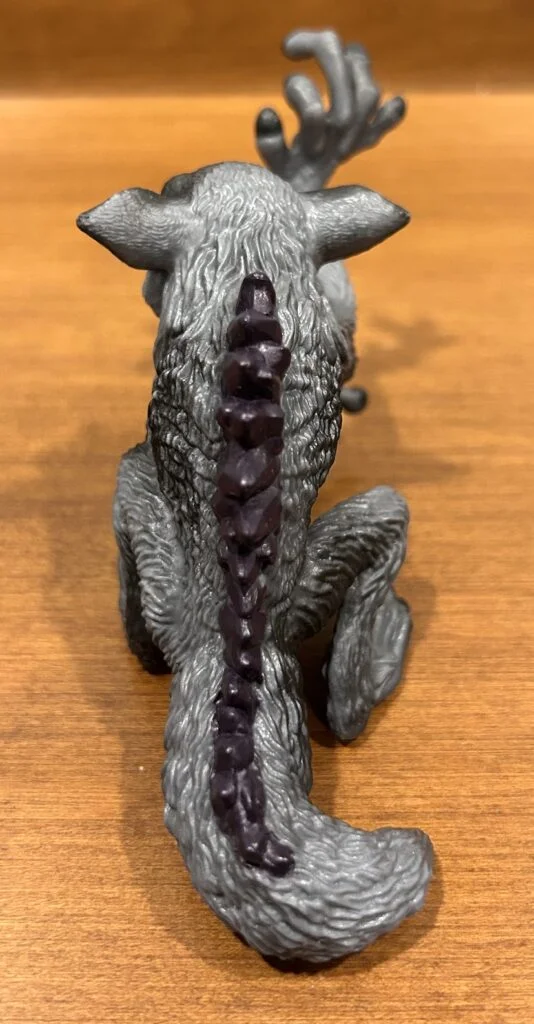
Display impression
For a display, the low stance gives the Shadow Lemur a clear direction of movement. It can sit near other Eldrador creatures as though creeping across the ground, or face outward as a small focal point. Its tail and reaching arm extend the pose beyond the compact body, so it has more presence than its height alone suggests.
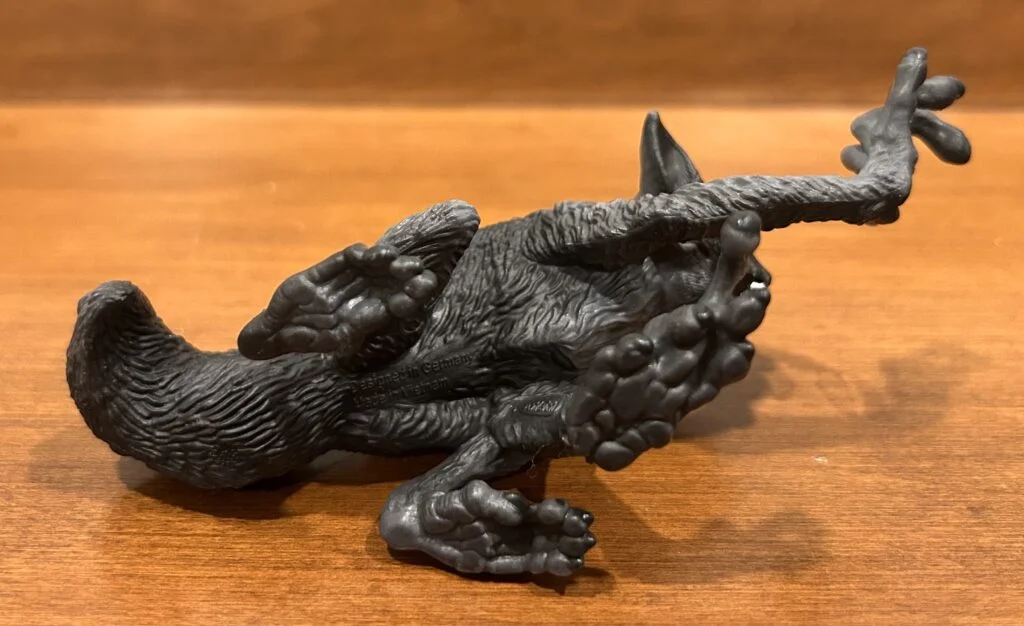
The warped supporting arm is the main concern raised by the review, because it affects the naturalness of the crouch. The rest of the sculpt is described as solid, with shaggy fur, uneven spikes and textured palms and soles supporting the creature’s rough, nocturnal look. Collectors considering the figure for display may want to check that the supporting hand sits convincingly against the surface.
Schleich’s Shadow Lemur succeeds by making a familiar animal reference feel distinctly strange. Its 14 cm reach, dark palette, red eyes and bristling back give it an unmistakable silhouette, while the aye-aye’s long fingers and large ears keep the concept grounded. The pose and warped arm are worth noticing, but the figure’s sculpted texture and eerie expression make it a compelling creature for an Eldrador monster display.