Monday, July 27, 2026 · Toys & Action Figures
Cyberzoic Kuraokami Review: A Large Arctic Dragon Figure with a Highly Articulated Tail
Noted by faelrin · 445 reads
Creative Beast Studio’s Kuraokami pairs intricate Arctic Dragon detailing with flexible neck and tail joints, plus a striking blue and purple paint scheme.
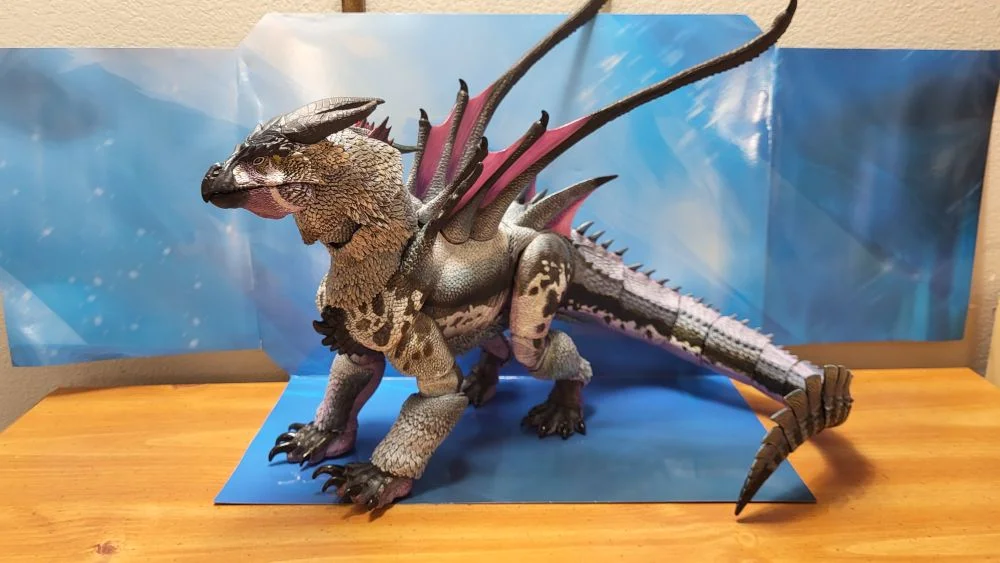
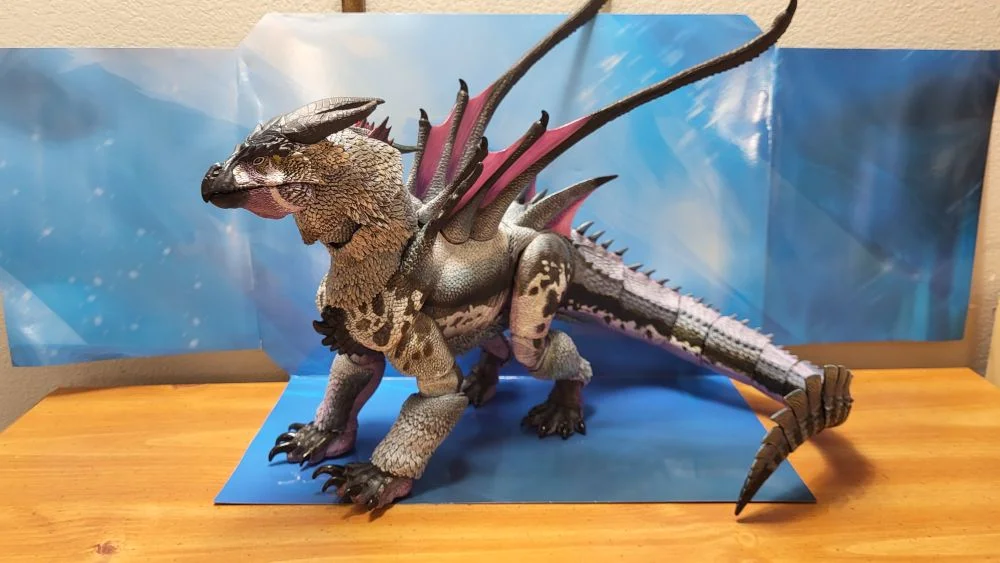
Creative Beast Studio’s Kuraokami makes its strongest impression through scale, surface detail and the freedom to pose its long neck and tail. This Cyberzoic Arctic Dragon is a substantial figure built around an earlier design by David Silva, with a look that draws on reptile features and unusual sail-like wings. Its size and elaborate finish make it a striking display piece; the many joints also give it room to take on more than a neutral stance.
The figure carries a personal history for its reviewer. After seeing an early Arctic Dragon model kit at JerseyFest in 2016 and meeting Silva, the reviewer had hoped to see the design become an action figure. This review is dedicated to EmperorDinobot, who had intended to cover Kuraokami shortly before his death on July 21 of the previous year.
From model kit to Cyberzoic figure
Kuraokami’s roots reach back to Creative Beast Studio’s model kits, which predated the Beasts of the Mesozoic action figures. Silva sculpted the original Arctic Dragon kit, released in 2015. Its visual ancestry also includes McFarlane’s Dragons Ice Clan Dragon from 2007; Silva contributed concept art and sculpting to that project. The action figure translates this earlier design into a larger, articulated format while retaining its distinctive silhouette.
After the Raptor Series Kickstarter succeeded in 2016 and the Ceratopsian Series followed in 2019, Creative Beast Studio began planning dragon figures in early 2020. The Arctic Dragon was selected as the first design in a social media poll. Concept art appeared in November that year, but the Tyrannosaur Series took priority and launched on Kickstarter in September 2021. The Arctic Dragon was teased as a glimpse of the Cyberzoic line.
Raul Ramos digitally sculpted the action figure, first shown in January 2022. Silva later adjusted it using parts of the original kit, including the head. A painted prototype appeared in September 2022. Matt Holt completed most of its paintwork, with Silva making a few touch-ups. Kuraokami, named for a Japanese dragon and deity associated with rain and snow, joined Cyberzoic’s first wave in early 2025, alongside Achillobator giganticus, Allosaurus jimmadseni and Smilodon populator.
For more on the surrounding releases and design history, see the Cyberzoic Carnotaurus review, the original Arctic Dragon model kit, Creative Beast Studio’s account of the dragon’s design inspiration, and its pages on the Arctic Dragon selection and November concept art. The sculpt and prototype stages are covered in the January 2022 sculpt reveal and September 2022 prototype reveal.
Packaging, scale and first impressions

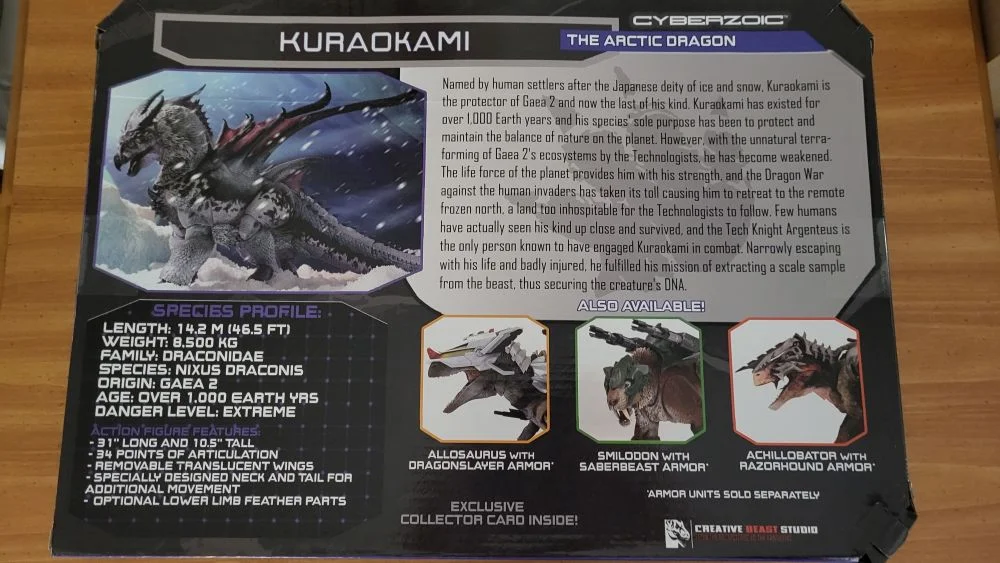
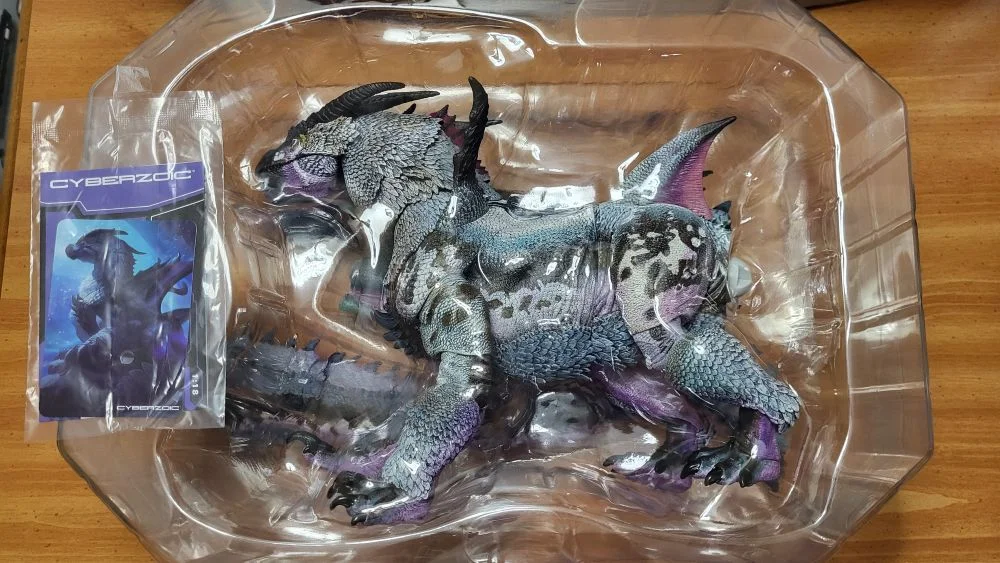
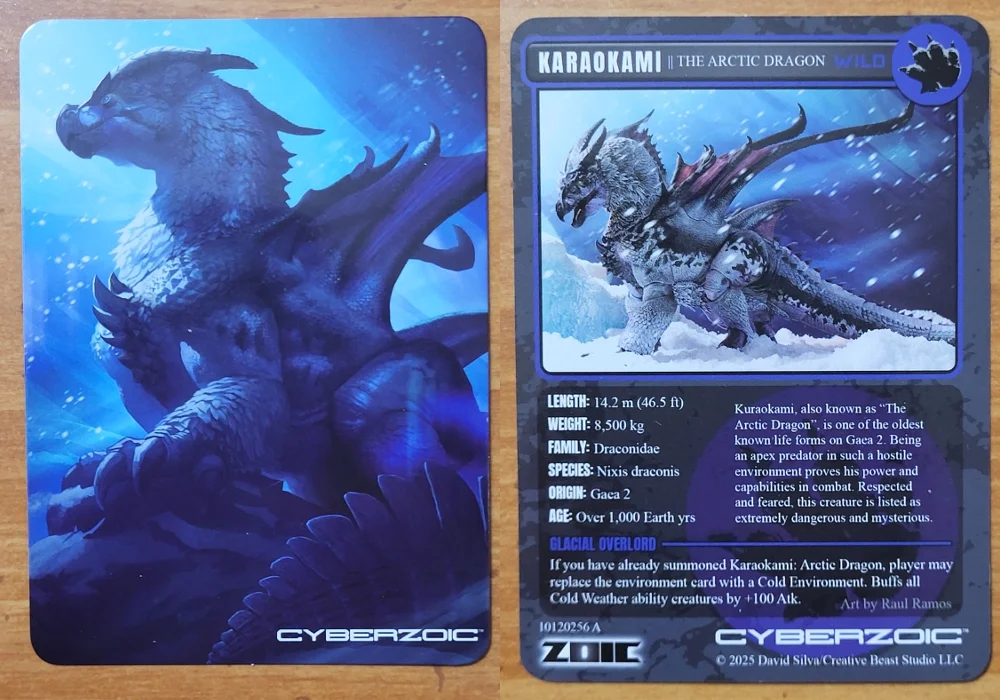
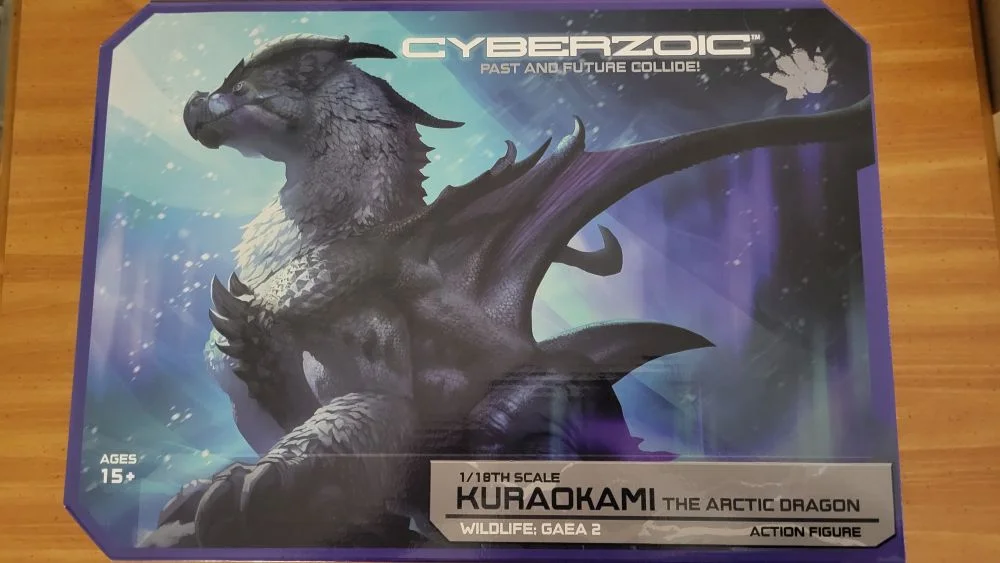
Raul Ramos’s artwork dominates the large box front. On the back, a short piece of Kuraokami lore sits alongside a figure image and pictures of the rest of the wave. The packaging gives the fictional dragon a genus and species name, Nixus draconis, in keeping with the presentation used for Creative Beast Studio’s other creatures.
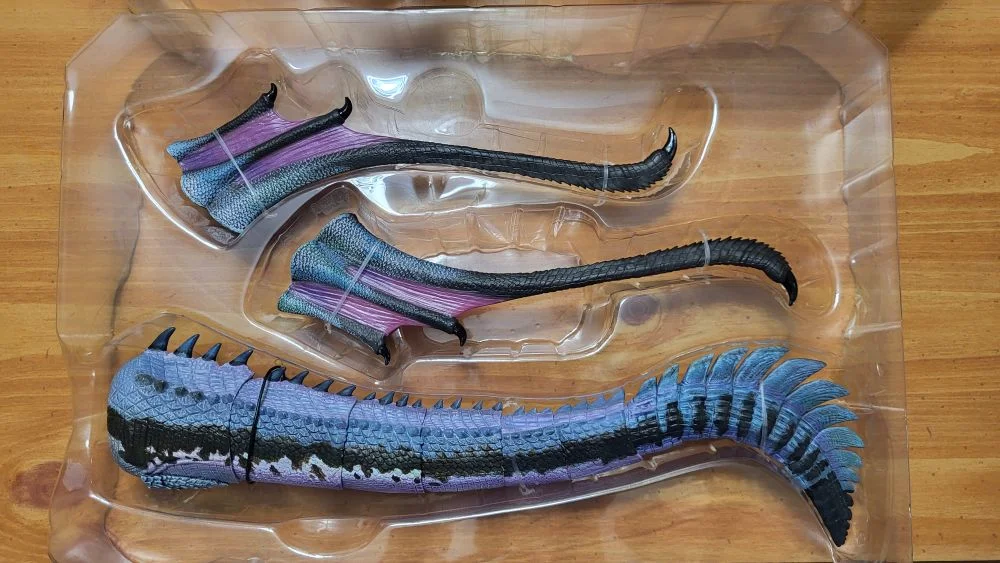
Two plastic trays hold the contents. The first contains most of the figure; the second stores the wings and tail, which require minor assembly. A backdrop insert, instructions and Zoic TCG card are included. The card uses Ramos’s box artwork on the front and a figure image on the reverse. Optional feather-scale covers fit over the limbs and can be removed.
The box measures about 40.6 cm (16 inches) long, 27.9 cm (11 inches) high and 18.4 cm (7.25 inches) wide. With its neck and tail straightened, the figure reaches about 62.2 cm (24.5 inches) in length and 31.1 cm (12.25 inches) at the wing tips. Pose changes affect those measurements. Silva’s clarification gives the figure as 23.5 inches long and 11 inches high at the wing tips; the original prototype had been measured incorrectly at 31 inches long.
The intended scale is 1/18, though a fictional creature of this size can be displayed across scales. At 1/35, it reads as an exceptionally large beast, with even a large T. rex or woolly mammoth looking smaller beside it. It can also sit among kaiju figures such as Godzilla or Gamera, or be treated as a smaller creature in a 1/12 display. The sculpt feels hefty and imposing out of the box, and the reviewer praises both its paintwork and articulation.
A layered sculpt with a reptilian palette
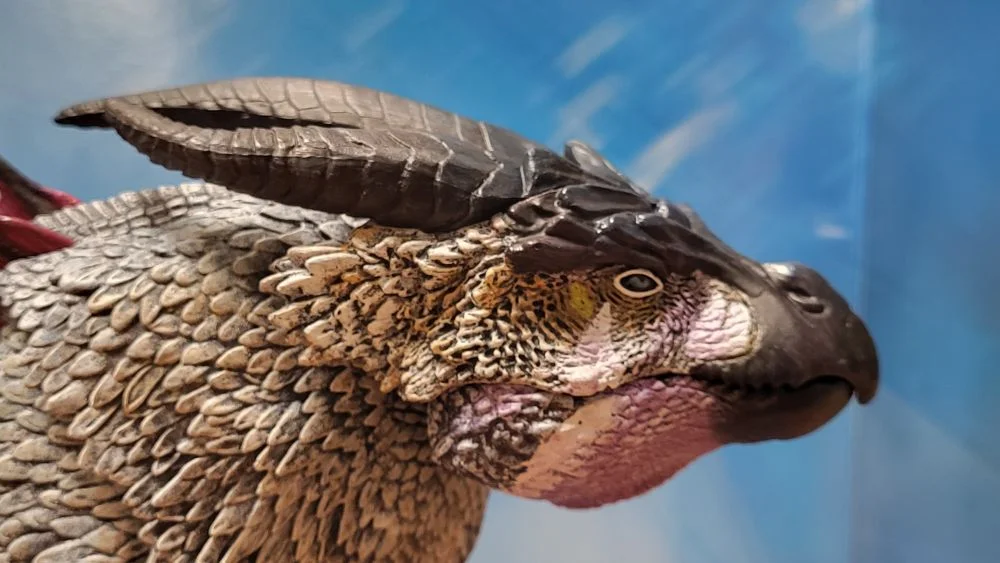
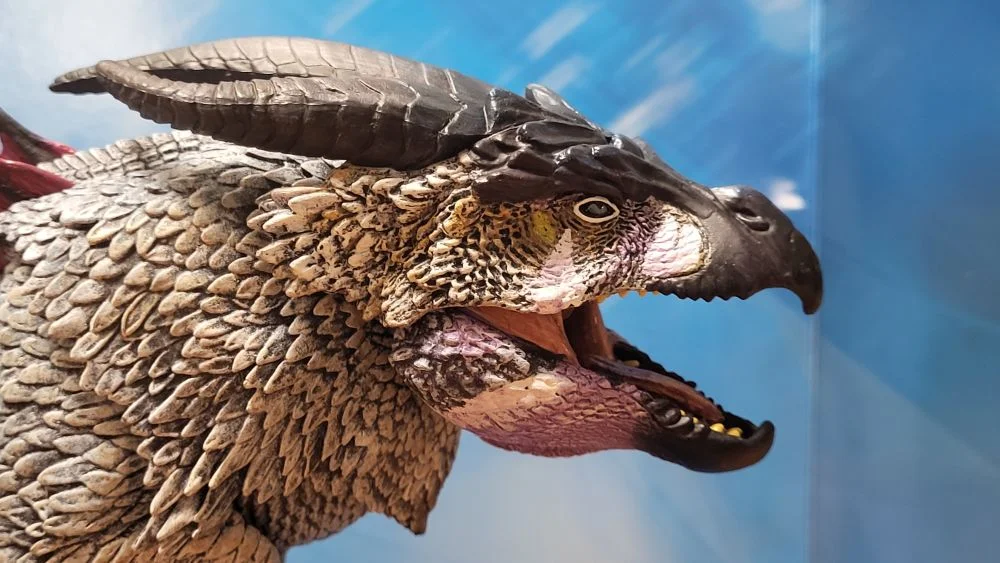
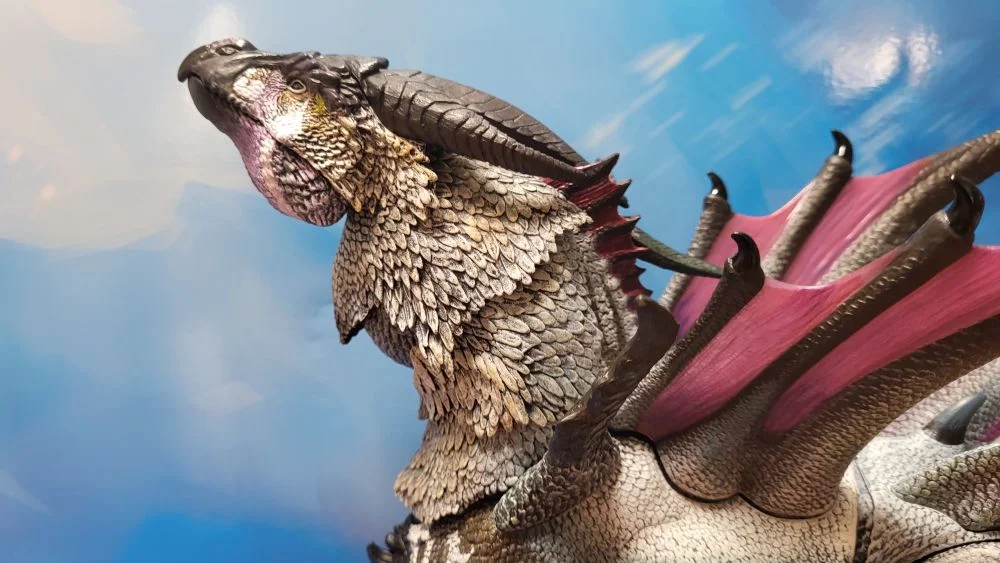
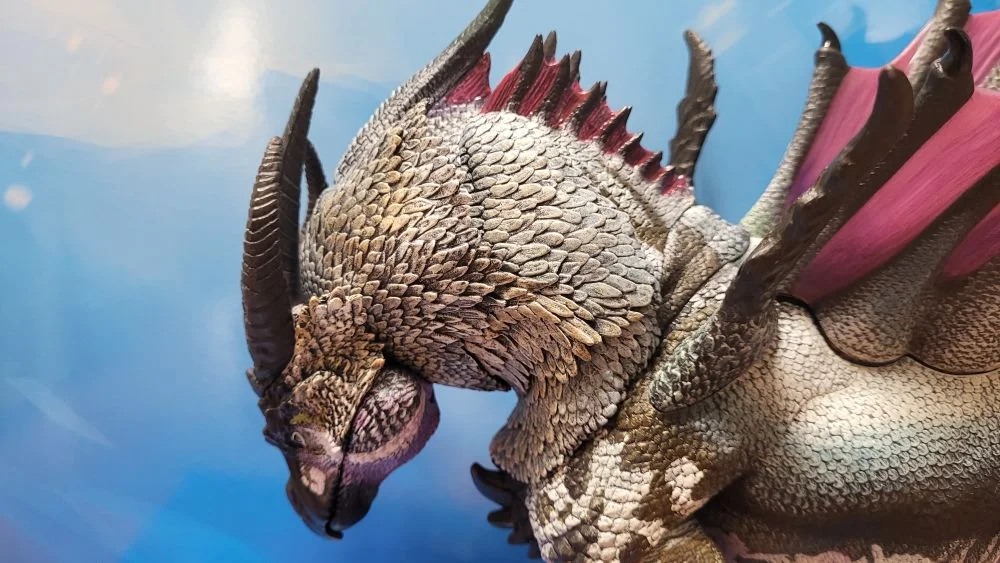
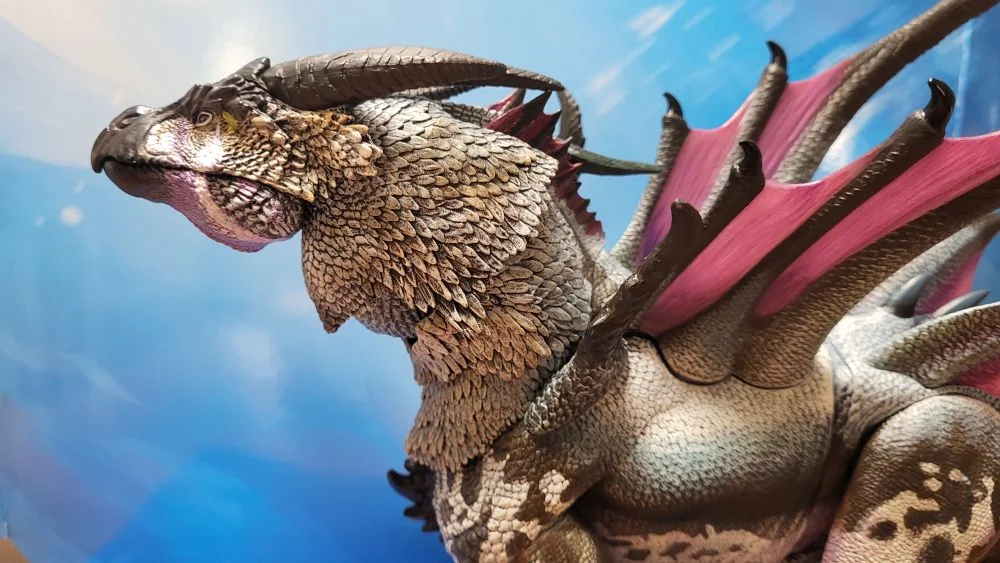
The head combines a serrated beak with small teeth tucked inside the jaws. Three prominent horns rise above it, with a fourth beneath the middle horn, positioned within a sail along the neck. The horn texture draws from Jackson’s chameleon (Trioceros jacksonii), while the neck’s fine feather-like scales take cues from bush vipers.
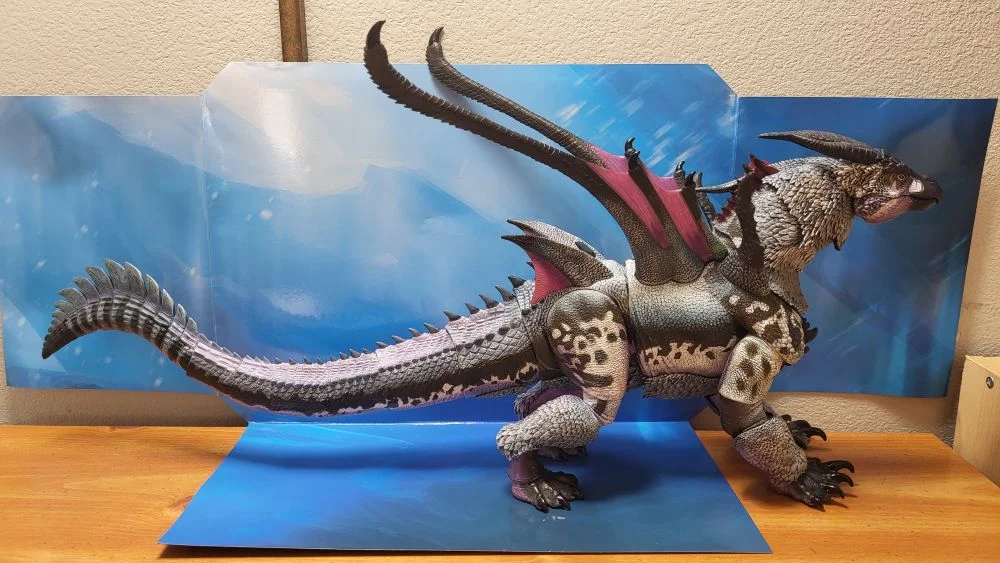
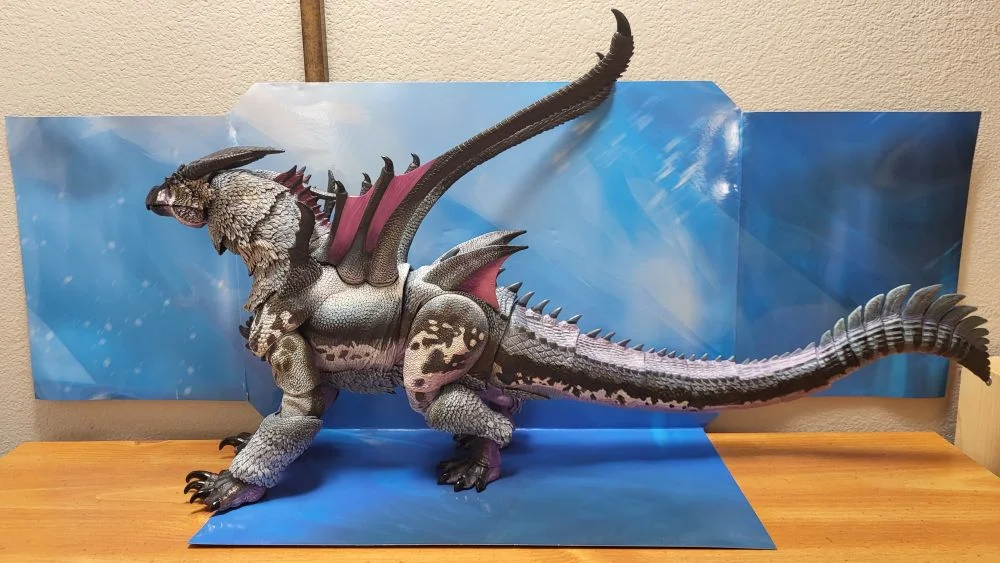
The wings depart from the familiar bat-wing shape. Their sails instead bring to mind the back structures of Amargasaurus and Dimetrodon, though Kuraokami’s wings have their own outline. A paired, fin-like feature sits over the pelvis. Scutes cover the chest, while the belly carries the finer scales found on the neck. Each paw has five digits and large talons; the feet are digitigrade, like those of cats, dogs and theropods.
Rows of large spikes begin at the hips and run along the tail. Their shape recalls the spines of Jackson’s chameleons and other lizards, enlarged for the dragon. The tail ends in a crocodile-like section. Across the body, tiny scales provide a fine texture, with larger scales picked out on the shoulders and tail.
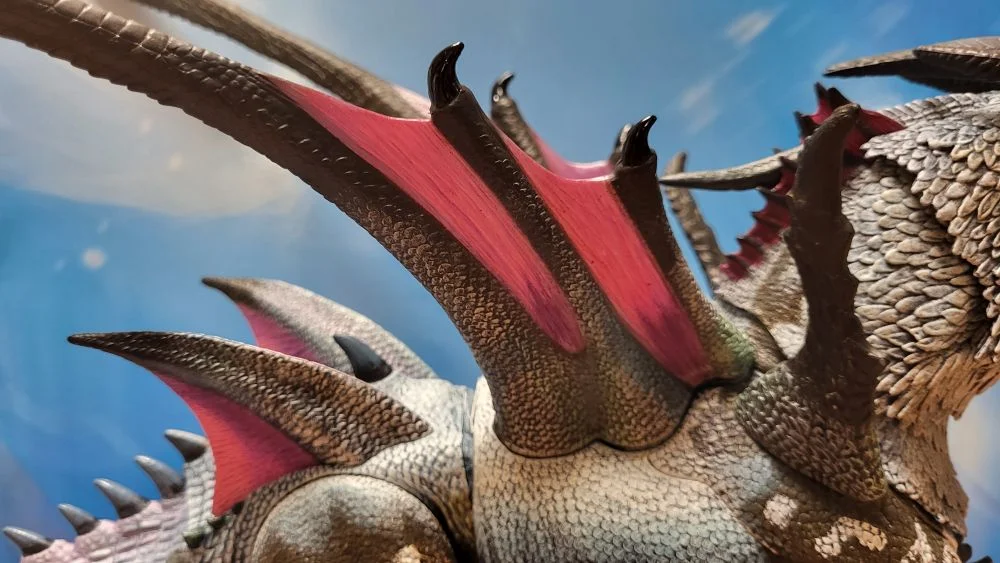
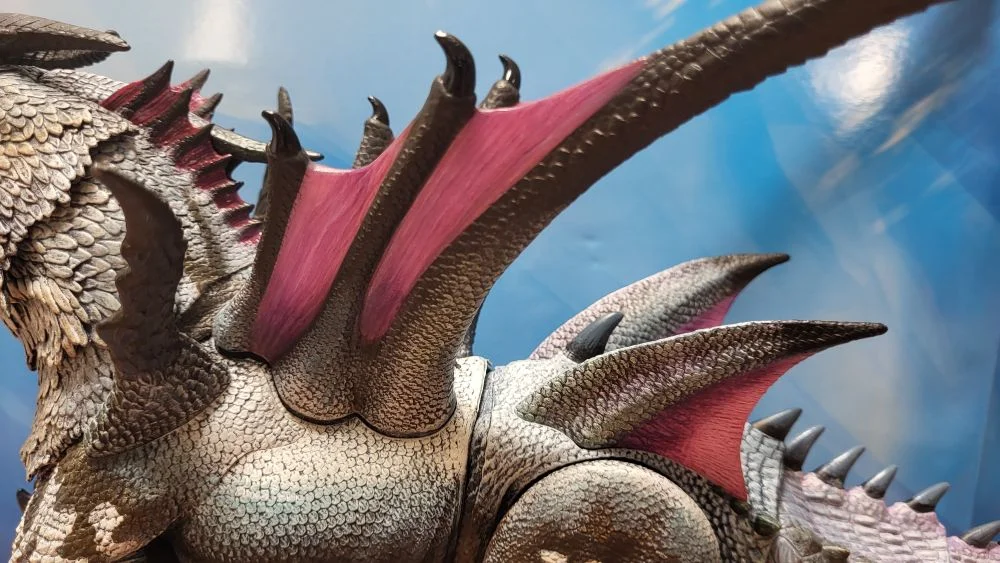
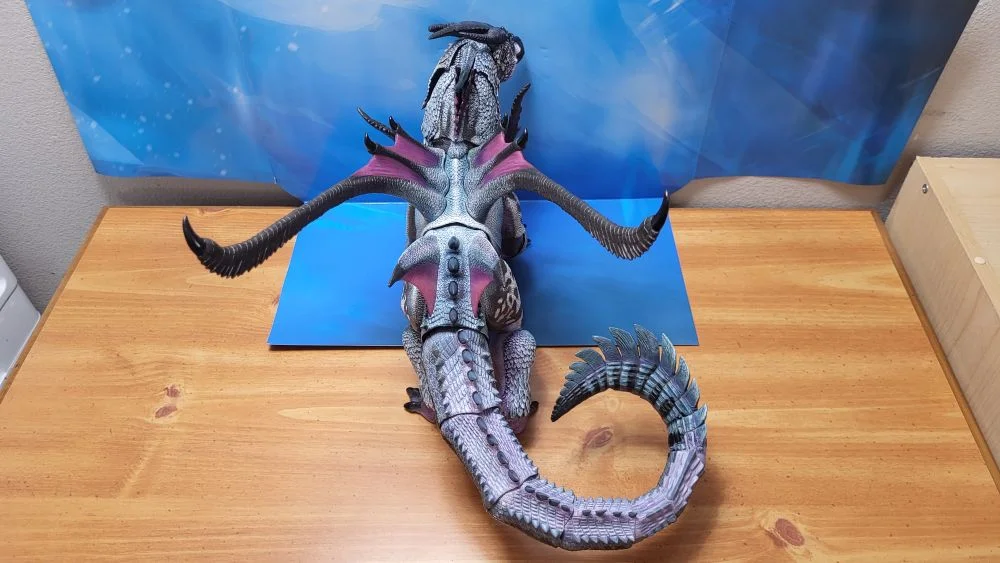
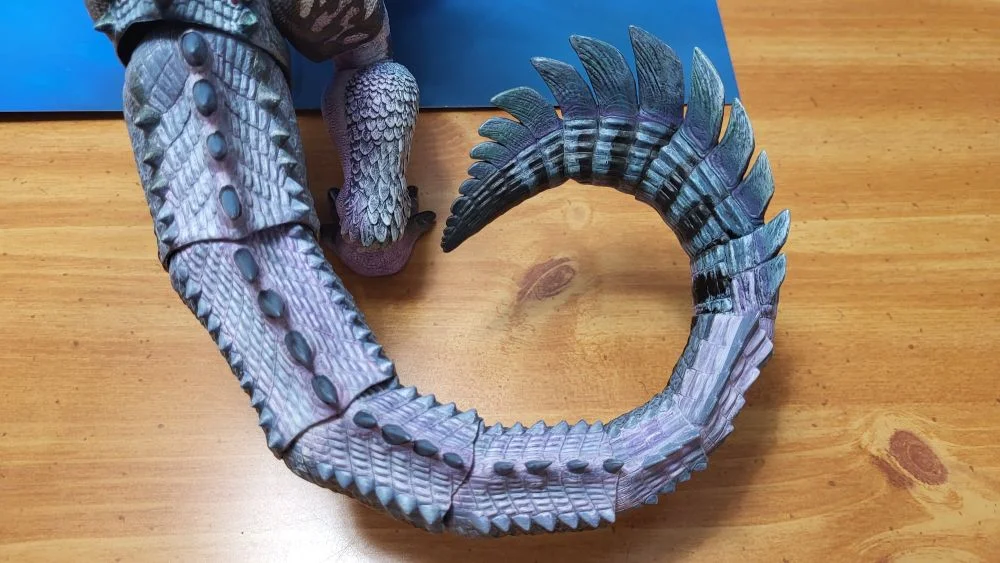
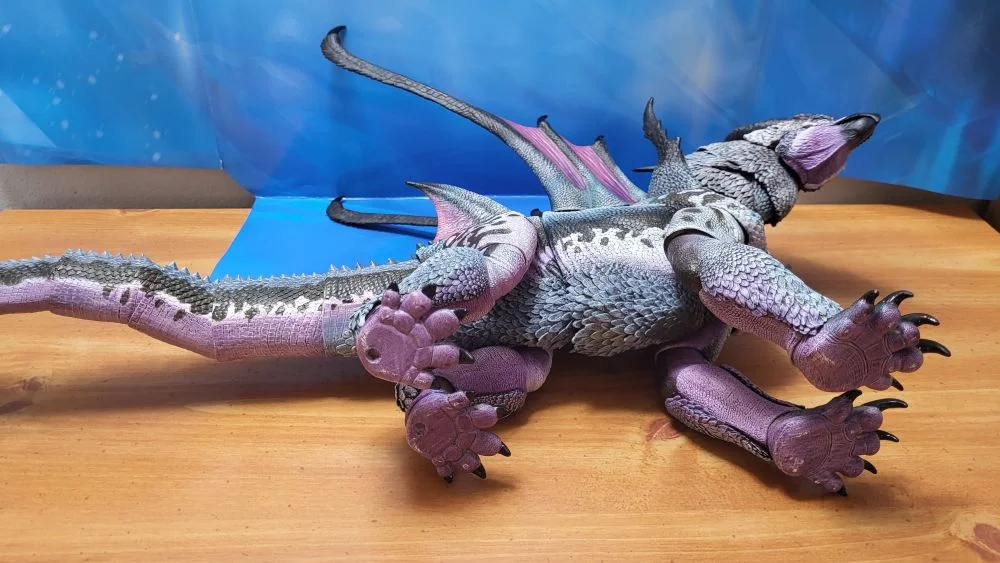
The paint scheme takes inspiration from the oreo colour morph of the African fat-tailed gecko (Hemitheconyx caudicinctus). Its many layers reward a close look: black and dark navy cover the beak and most horns, while the mouth interior is dark pink with a glossy finish. Purple, white and bronze accent the head, blue eyes stand out against yellow patches behind them, and a bronze wash runs over pale sky blue and white on the neck.
Purple fills the inner neck sails, wing membranes and pelvic fins. Those areas appear to use translucent material, allowing light through. A little green marks the wing digits near the torso, some pelvic spikes and fins, and possibly the tail tip. White, sky blue, darker blue, purple, black and dark grey make up the body’s spots and stripes. The chest scutes are dark, while blue belly scales receive bronze shading. Purple appears on the inner limbs and paw undersides. The tail carries the body’s black patterning, blue and light purple along its upper side, and darker purple below. Deep blue and black tiger-like stripes define the crocodile-like end and nearby spikes.
The reviewer found fresh paint chips on the paws straight out of the box. That flaw is worth checking when unpacking and handling the figure, particularly around the feet, where the finish has already shown some vulnerability.
Articulation and display options
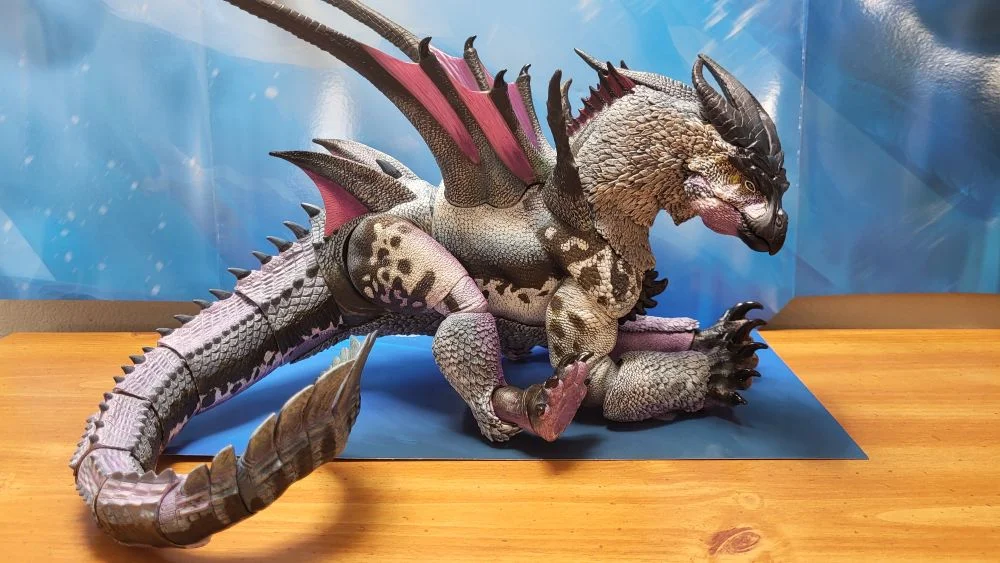
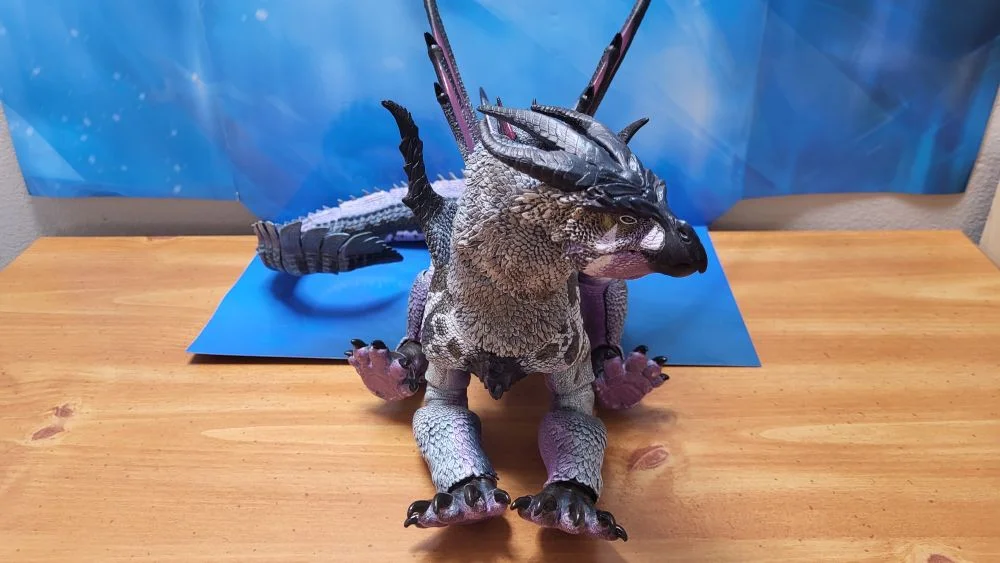
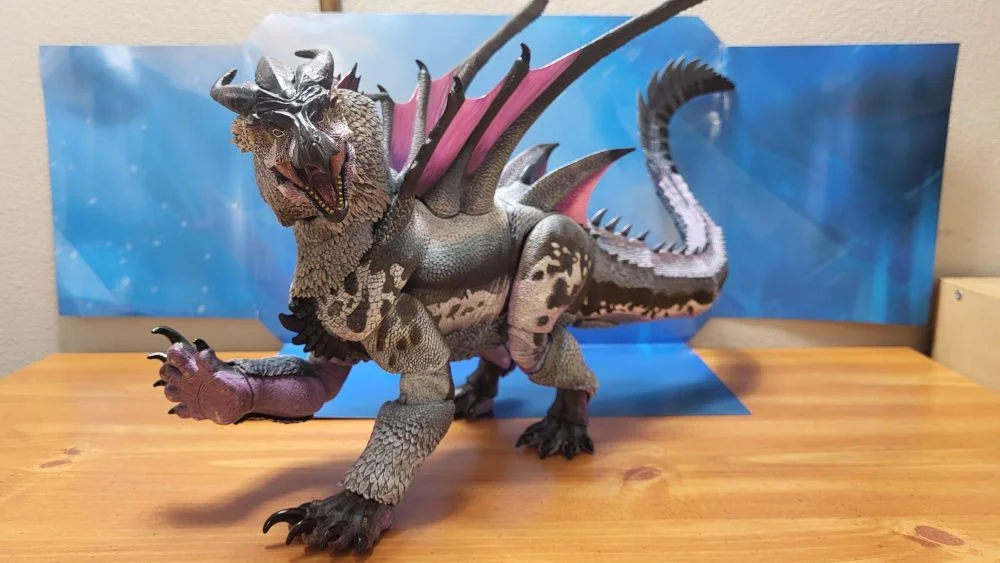
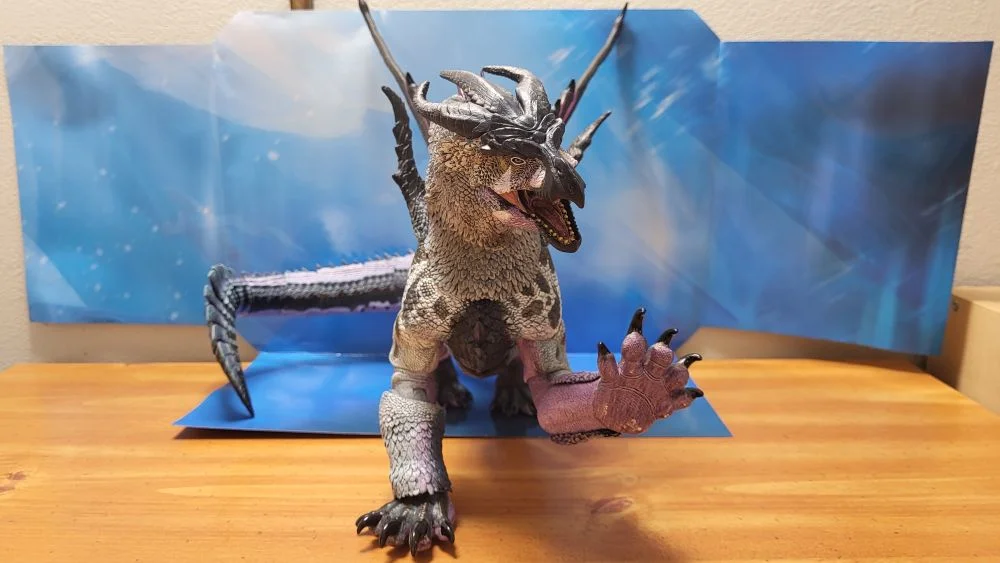
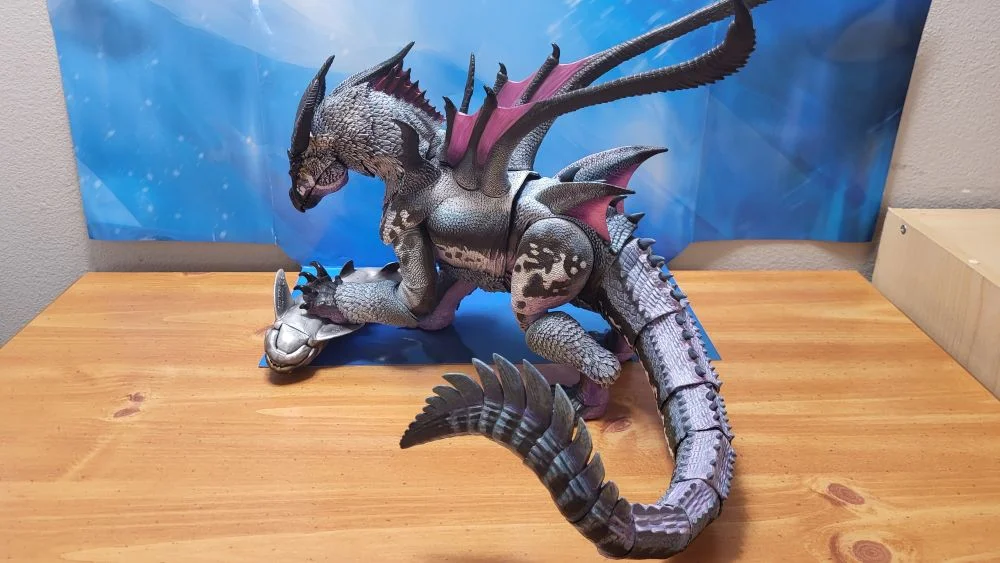
The jaw and tongue move, and the head’s ball joint allows a full turn, useful side-to-side travel and some vertical movement. Several joints run through the neck, giving it a broad up-and-down range and a good amount of lateral motion. Flexible covers, including the piece that carries the neck sails, can be shifted to make room. The cover at the neck base can be pulled over the chest spikes to gain a little extra movement. A torso joint adds further pose options.
The shoulders have limited travel because of the surrounding sculpt. The hips move more freely and may rotate fully, though the reviewer did not test a full turn. The elbows and knees have double joints, and the limbs can twist. Optional feather-scale sleeves restrict wrist and ankle movement; removing them opens up those joints. The paws and ankles themselves have little vertical motion and can mainly rotate. That limits some foot posing, but the figure can sit, rear up with a stand likely needed, or lift a forepaw for a swipe.
The tail is the standout joint system, with ten joints including the one at its base. Spikes limit rotation along much of its length, but the base and the section where the crocodile-like tail begins turn more freely. Side-to-side bending is especially effective near the tip, letting the tail curl tightly. The final joint was added late in production during the fine-cut stage. The linked production update also includes an earlier breakdown of the neck joints and flexible covers.
Comparison photos place Kuraokami beside other creatures from the Cyberzoic and Beasts of the Mesozoic lines, as well as figures from other makers. They help show how its intended 1/18 scale reads beside familiar dinosaurs, a mammoth and kaiju figures.
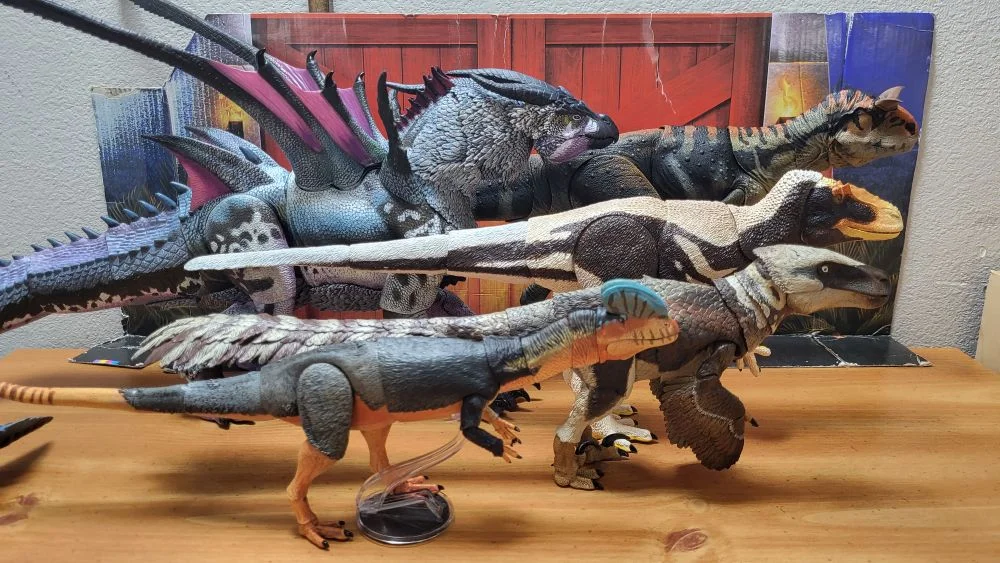
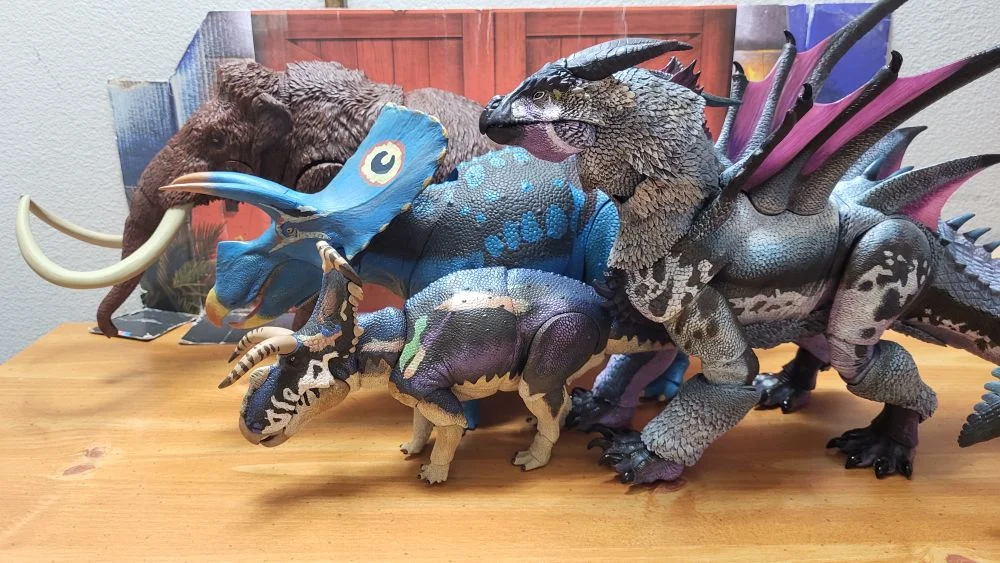
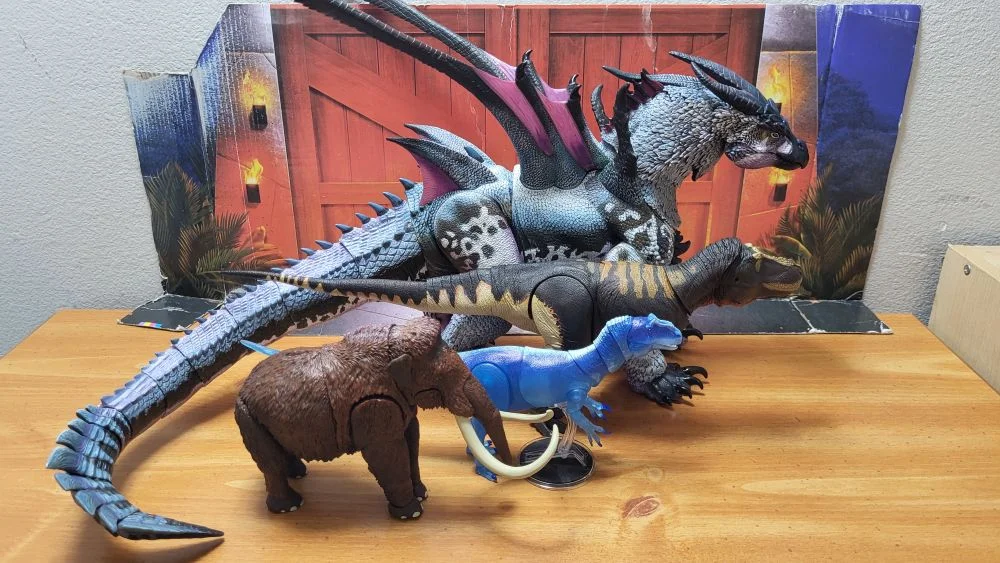
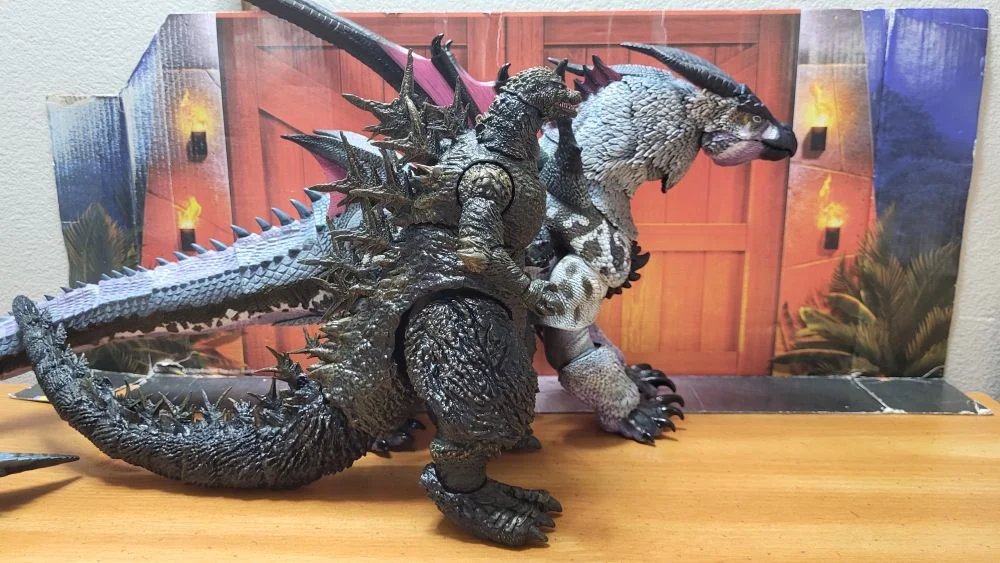
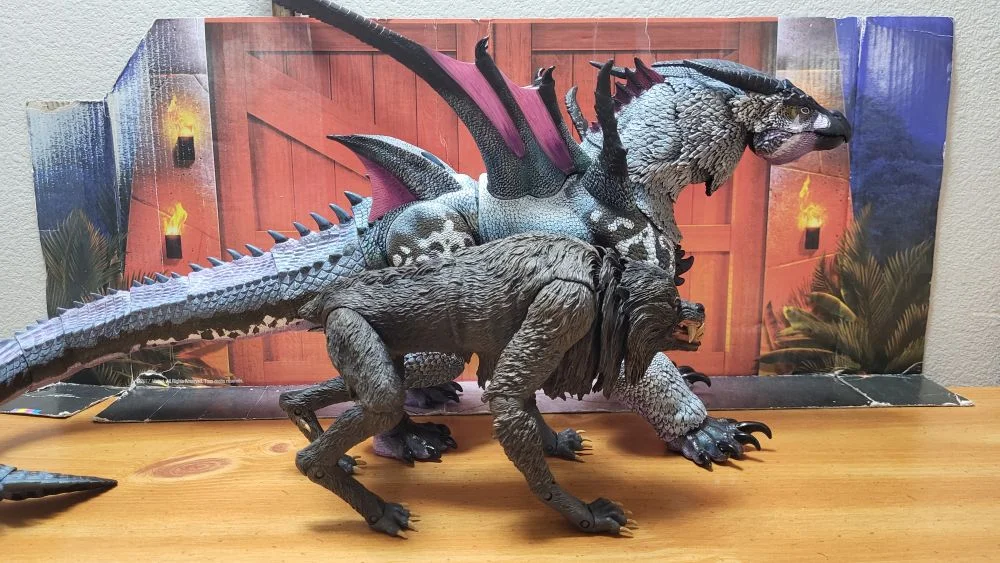
Kuraokami’s mix of sculpted texture, layered colour and unusually flexible tail makes it a memorable dragon figure, though the chipped paw paint and limited foot movement deserve attention. The reviewer records a manufacturer’s suggested retail price of $230 and found the figure worth the cost, while noting that it was out of stock at Creative Beast Studio at the time of writing and supplies at other retailers were dwindling. A smaller 1/35 version would be easier to handle and display in tight spaces. For collectors considering this large release, the key practical details are its substantial footprint, pose-dependent measurements and finish around the paws.