Friday, October 9, 2026 · Stamps & Postal History
Schleich Eldrador Plant Monster: Sculpt, Articulation and Collecting Notes
Noted by suspsy · 322 reads
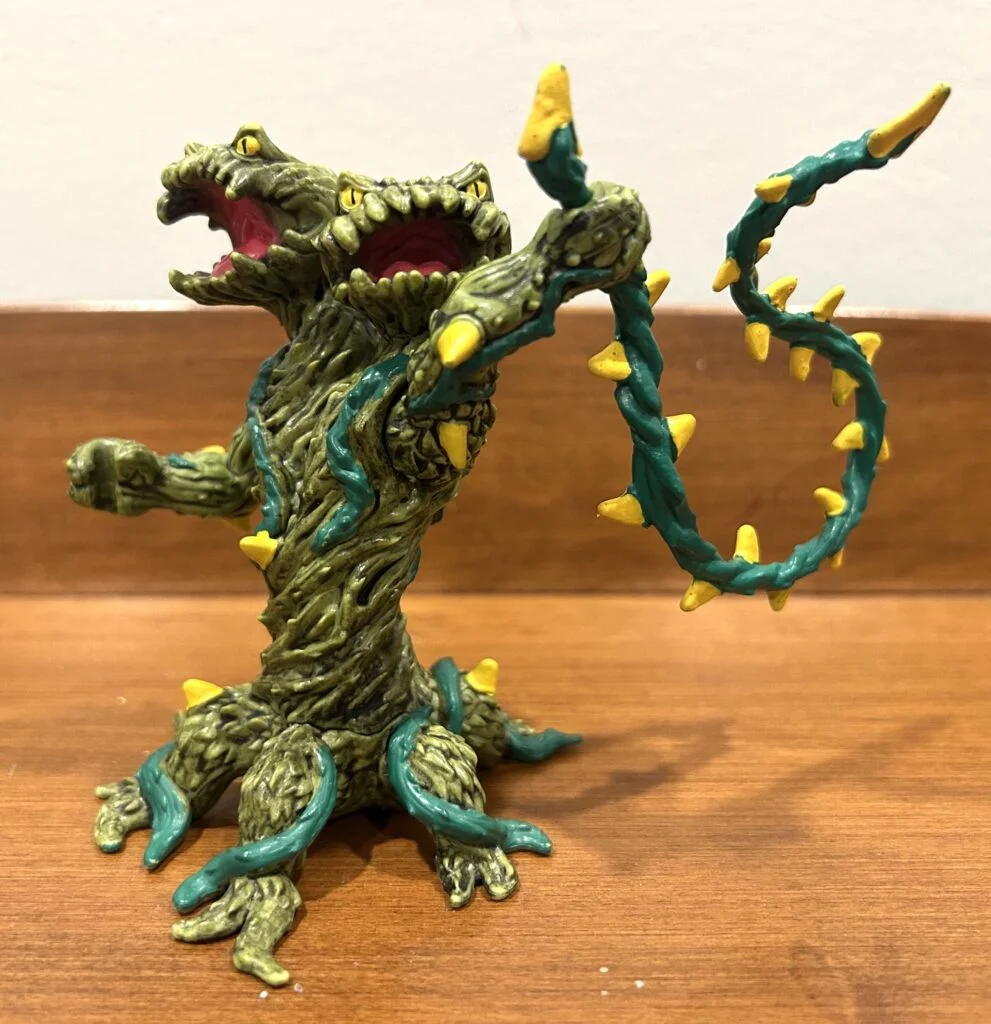
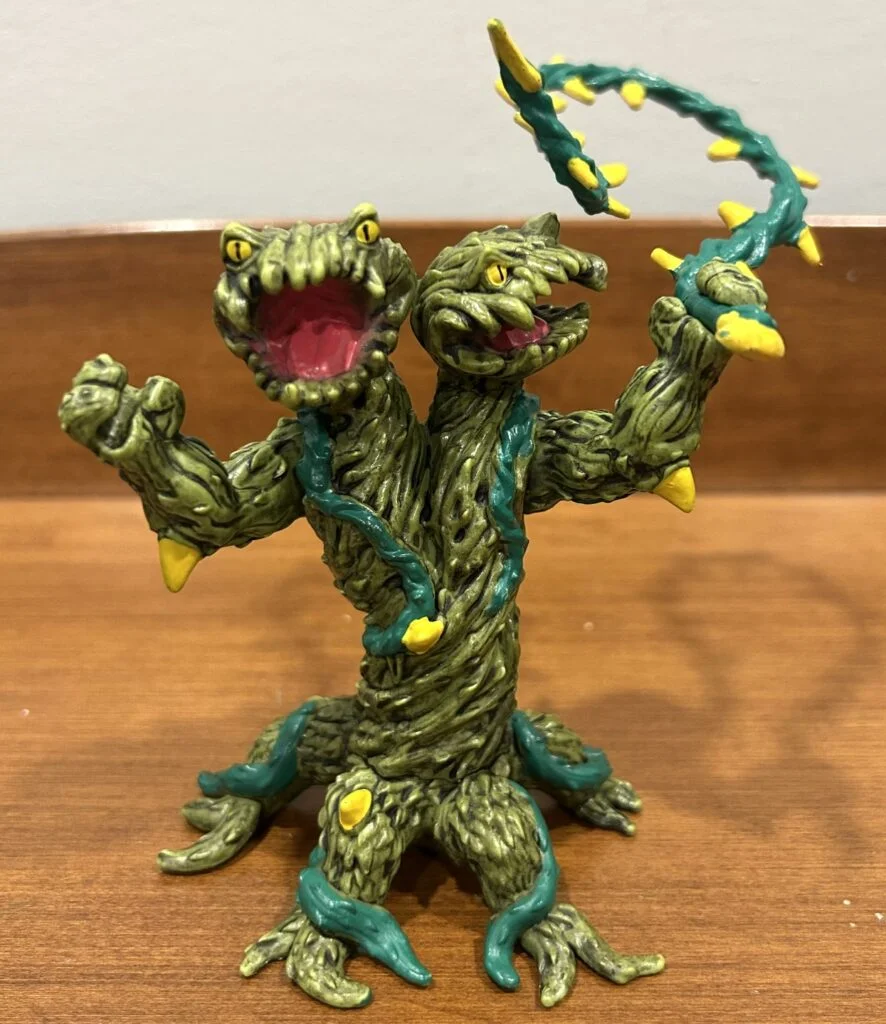
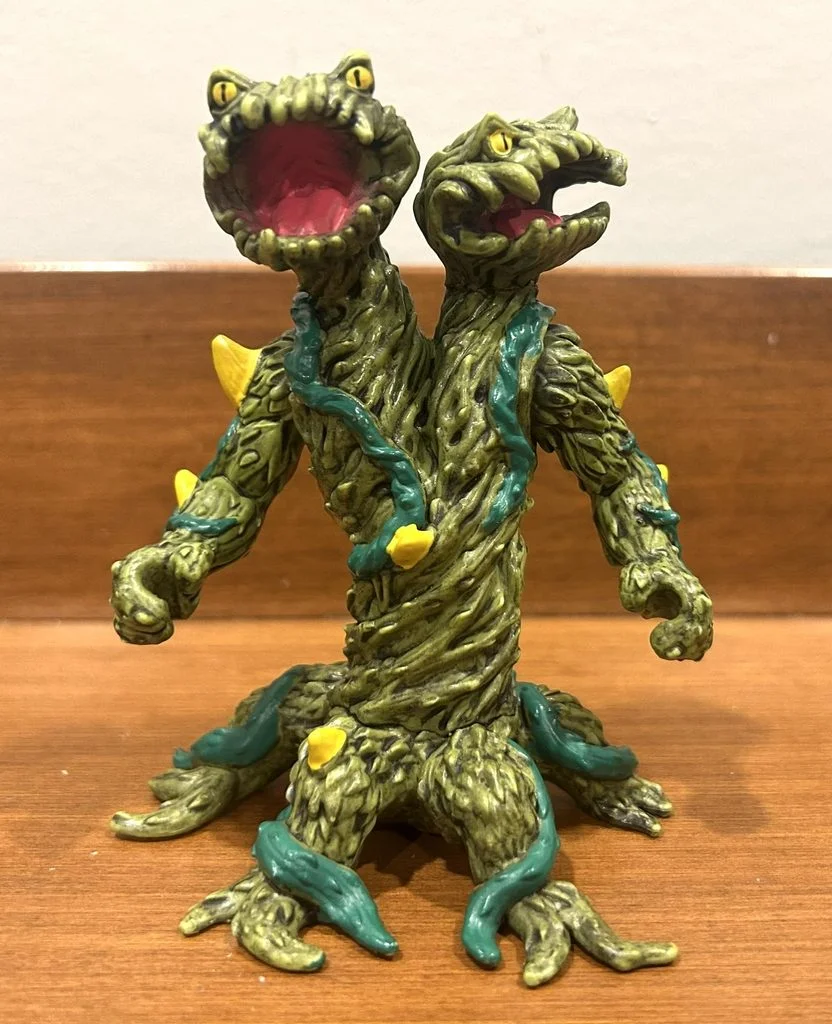
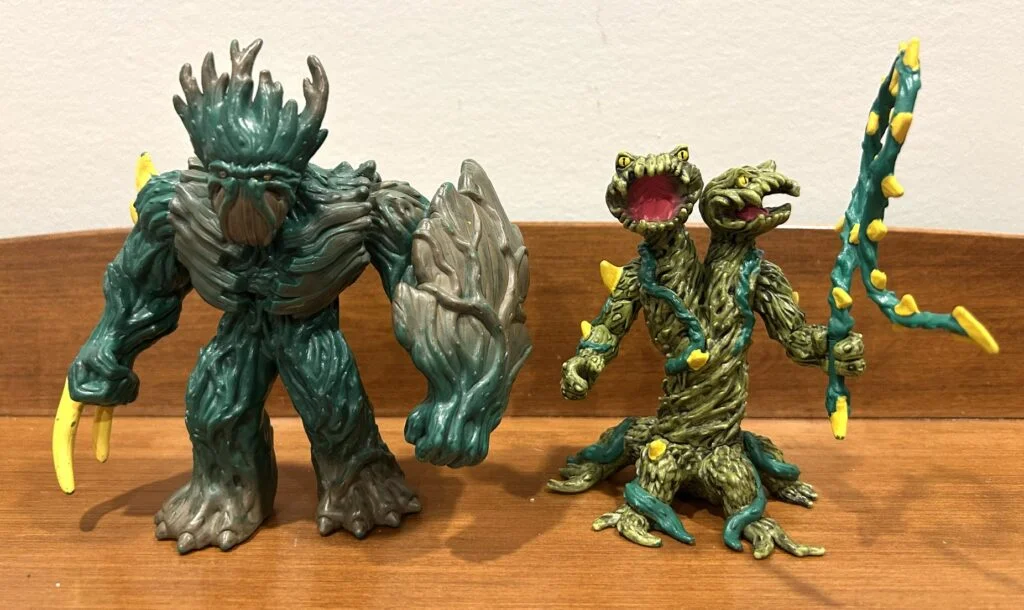
Schleich’s 10.5 cm Plant Monster pairs thorny vines, five root-like feet and twin flytrap heads with rotating arms and a flexible vine whip.
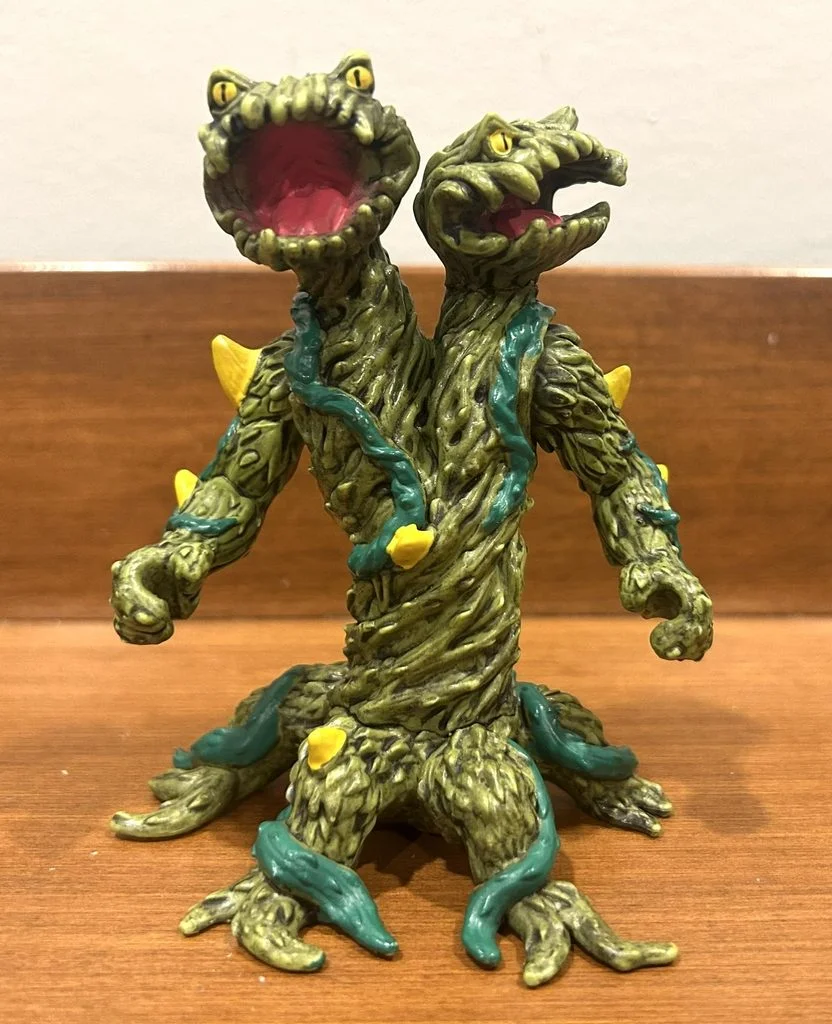
Schleich’s Eldrador Plant Monster makes its Jungle Kingdom identity immediately clear: tangled vegetation forms the body, five roots spread beneath it, and two open, flytrap-like heads dominate the sculpt. At 10.5 cm tall, it’s a compact figure with plenty of surface detail and a distinctive silhouette. Its rotating shoulders and removable-in-hand vine whip add play options, while the whip’s handle deserves a little care.
A body built from vines and roots
The figure’s body is made up of tightly packed, thorny vines in a muted green. Thicker strands in a brighter grass green run through that darker mass, giving the sculpt some contrast without breaking up its overgrown look. Large yellow thorns stand out against the greens and help the surface read as a dense, prickly tangle from a distance.
Those color and texture choices do much of the character work. Rather than relying on clothing or armor to establish a role, the Plant Monster looks as if it has grown directly from the vegetation around it. The design suits the Jungle Kingdom setting and gives the figure a strong outline among more conventional monster toys. The height is modest, but the branching shapes and twin heads make it visually busy.
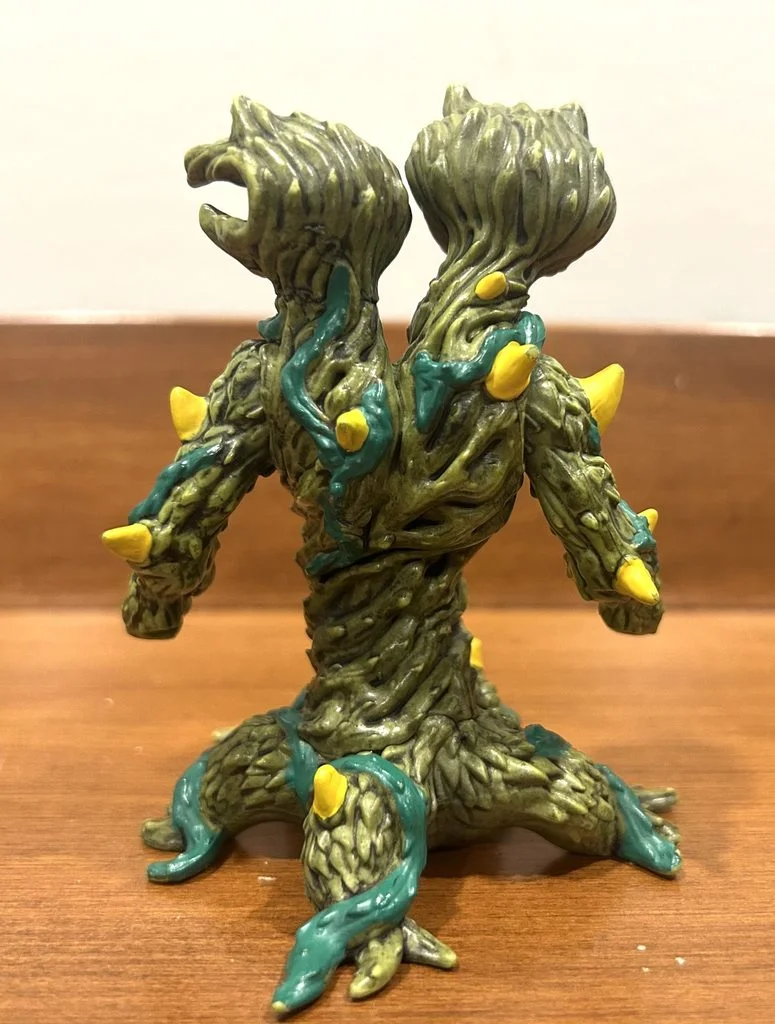
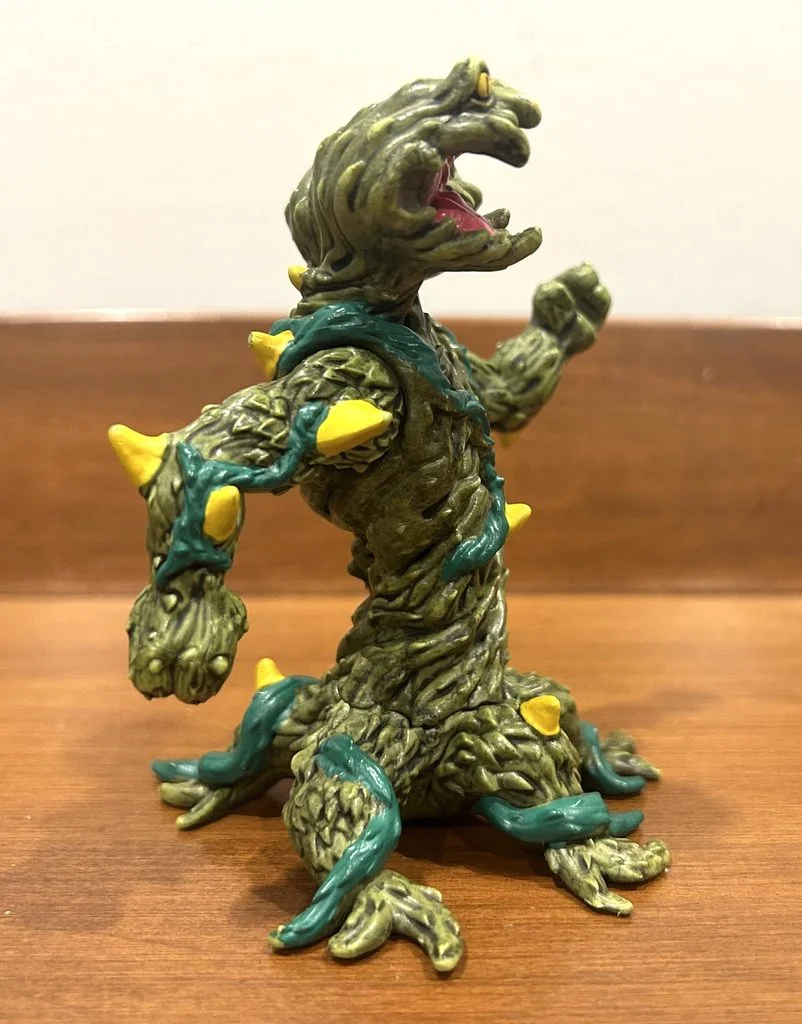
Instead of a pair of legs, five spreading roots support the body. They create a broad base and reinforce the impression that this creature belongs to the ground as much as it does to a conventional monster lineup. Its arms are short and muscular by comparison, ending in three-fingered hands. Both arms rotate at the shoulders, allowing some adjustment to the pose.
Twin heads give the figure its character
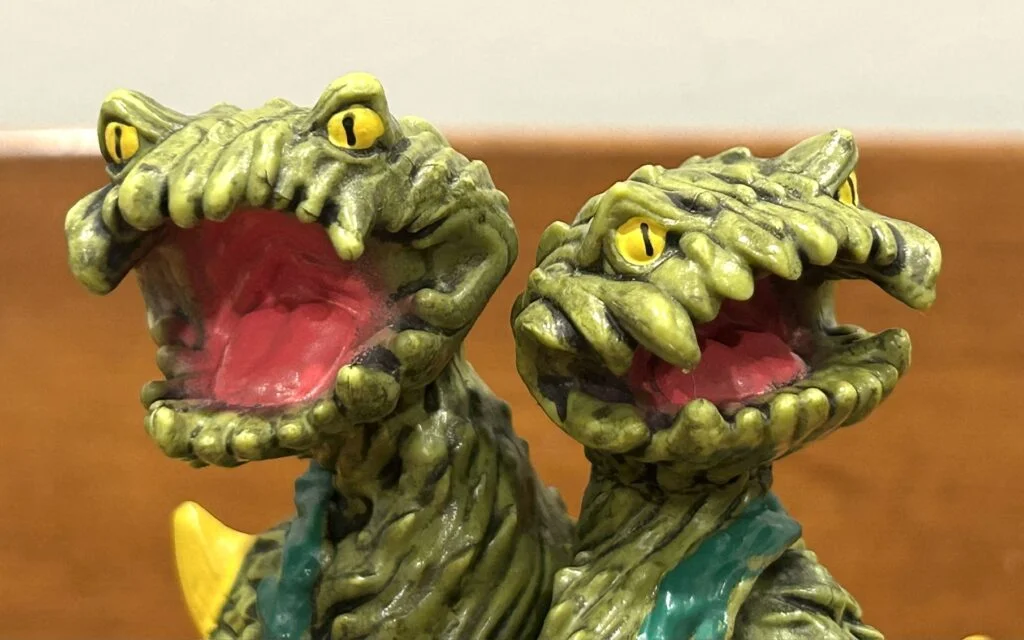
The two oversized heads are modeled after the carnivorous Venus flytrap. Each has glaring yellow eyes and a pink mouth lined with tooth-like projections. Their slightly uneven size keeps the pair from looking identical: the right head is taller than the left. The original description suggests it may have sprouted first, a playful reading of a sculpted difference rather than a separate feature.
That asymmetry makes a small but effective contribution to the figure’s personality. The heads face the viewer with an openly menacing expression, while their plant-like shape connects the monster to the surrounding vines and thorns. Together, these details make the face area the natural focal point. From there, the eye moves down across the layered body to the unusual root feet.
The whip and handling notes
The Plant Monster comes with a thorny vine whip. It can be held in either fist, though it fits best in the left. The whip is made from relatively flexible plastic, which helps it sit in a posed hand, but the handle can experience stress. When handling or repositioning it, the grip area is the part to watch. The hands can also hold other compatible weapons, according to the original description.
This accessory adds another visual line to an already irregular figure, echoing the vines that cover its body. Its flexibility is useful for posing, but the reported stress at the handle is a practical detail for owners to keep in mind. For display, the whip can be placed in the left hand for its best fit; for play, the rotating shoulders offer a straightforward way to change the arm position.
A discontinued Eldrador figure with a repaint ahead
The Plant Monster has been discontinued for some years, making it a past release for collectors of Schleich’s Eldrador figures. The source describes it as a playful fit for the line, and its unusual combination of five roots, rotating arms, twin flytrap heads and vine accessory gives it several features to look for when identifying the figure.
A repaint for the Lava Kingdom is planned for next year, according to the source. That gives the character a stated future appearance in a different Kingdom version, while the original Plant Monster remains defined by its green vegetation and bright yellow thorns. The source does not provide a release date, product number or further details for that repaint.
As a display piece, the original figure’s strongest cues are easy to pick out: the two mismatched carnivorous heads, the sprawling root base and the contrast between dark and bright green vines. The whip adds a separate accessory to keep track of, with its handle the main point to treat gently. Those specifics make the Plant Monster an unusually readable entry in the Eldrador range, whether it’s posed alone or alongside the Jungle Emperor.