Sunday, October 18, 2026 · Toys & Action Figures
Martha Boers’ Ball-Jointed Dragons Bring a Family Scene to Life
Noted by Christopher Garcia · 477 reads
A tender bedtime scene shows Martha Boers’ dragons tucked in with their stuffies, highlighting the storytelling behind her doll photography.
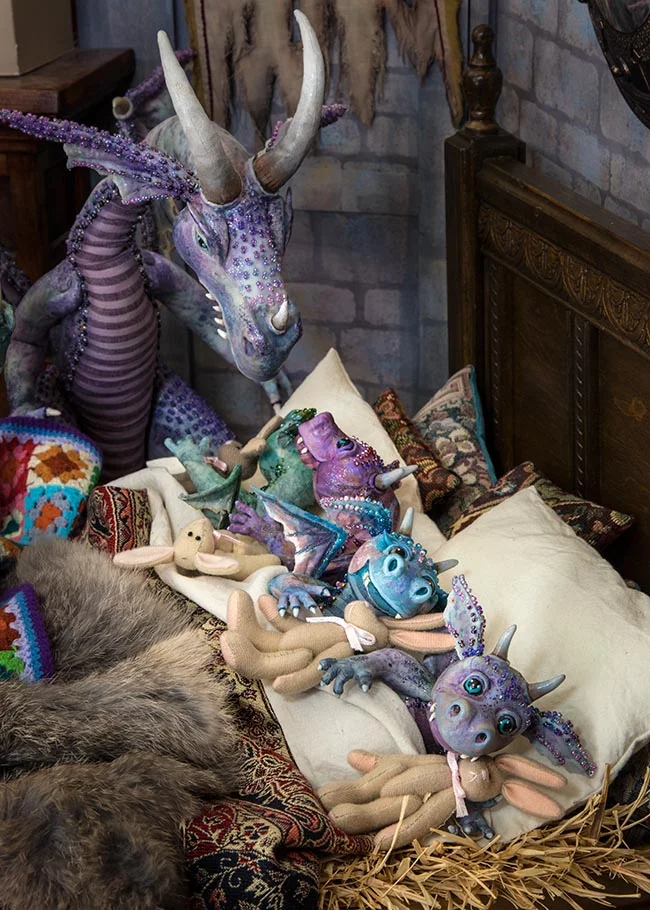
The charm of Martha Boers’ dragon photograph lies in its quiet domestic moment: a family has returned home safely, and the little dragons are settled into bed with their stuffed companions. The figures may look angelic at first glance, but the scene’s warmth comes from the suggestion of lives continuing beyond the frame. It gives the viewer a small, complete story without spelling out every detail.
A bedtime tableau with character
Boers gives the dragons a sense of personality through their pose and setting. Tucked in beside their stuffies, they appear relaxed and ready for sleep, while the bed places them in a familiar routine rather than on a display stand. That difference matters: the figures feel less like objects being presented for inspection and more like characters at the close of a busy day.
The family detail adds a small narrative arc. The viewer is invited to imagine Mama and Papa feeling relieved that everyone is home safe after a family vacation. The photograph doesn’t show the trip, and it doesn’t need to; the return home and the settled children are enough to suggest the journey and its happy ending. A few quiet cues carry the story.
That kind of storytelling is a distinctive pleasure of doll photography. A carefully arranged scene can imply relationships, routines and events without spelling them out, leaving viewers room to read the figures’ expressions and positions. Here, the soft, peaceful mood does much of the work, while the dragons’ faces and their companions invite the audience to fill in what the image leaves unstated. The restraint is part of its appeal.
Making dolls feel familiar
Boers is an award-winning Canadian doll artist and costumer who photographs her collection and creates stories around it. Her collection includes ball-jointed and artist dolls, figures that offer a range of forms and personalities for staging scenes. In this image, the appeal comes through an everyday ritual that collectors and casual viewers can recognize: children settling down at bedtime, with a favorite toy close at hand.
The dragons’ mythical appearance gives the scene a gentle contrast. These are fantasy characters, yet their tucked-in posture and stuffed toys make them instantly relatable. That pairing is more significant than it looks: an unfamiliar figure can become approachable when shown doing something ordinary. The setting encourages viewers to look closely, then imagine what happened before and what might come next.
For collectors, scenes like this also show how a doll collection can serve as a storytelling medium. A figure’s pose, costume and place among other objects can establish character without a long explanation. Costuming helps define the visual world; photography brings the figures together into a moment; and a short caption can leave room for the audience’s own interpretation. The image asks for attention, but not for a single correct reading.
Photography as part of the collection
Boers’ practice joins collecting with making. The dolls are the subjects, but the finished photograph is also a creative work shaped by arrangement and narrative. A bed, a few stuffies and a cluster of resting dragons create a clear scene with very little visual clutter. Each element has a job: the bed establishes the routine, the toys suggest comfort, and the figures carry the story.
That simplicity is useful in doll photography. Similar staged scenes typically depend on a clear focal point and props that support the action, because extra objects can compete with the figures for attention. A familiar setting can also give distinctive characters a sense of scale and routine. Here, the emotional cue is direct: the dragons look peaceful, and the imagined relief of their parents gives the quiet image a satisfying finish.
And yet, a simple arrangement still takes choices. The figures must be positioned so their relationships read clearly, and the surrounding objects need to feel natural rather than merely placed for the camera. (And this is the part most people overlook.) The photograph’s calm depends on those decisions being unobtrusive; the viewer sees a bedtime scene, not the work of constructing one.
What a small scene can mean for collectors
Boers’ photograph offers a reminder that collecting can extend beyond acquiring and displaying figures. For artists who work with dolls, a collection can become a cast of characters, ready for new scenes and stories. The photograph gives those figures a shared moment, which can make their individual designs feel connected to a larger world.
If you’re working in this space, the image offers a useful prompt: consider what a figure’s surroundings say about its life. A costume may establish a role, while a pose or familiar prop can suggest a relationship or routine. Those choices don’t have to produce an elaborate scene. Sometimes one recognizable activity is enough to help viewers imagine the rest.
That said, the photograph’s appeal rests partly on what it leaves open. We don’t see the vacation or hear the family speak; we infer a safe return from the resting dragons and the implied relief of their parents. The story is small. The sense of home is clear.
Boers’ photograph leaves the viewer with a calm final impression: the little dragons are home, their stuffies are close, and the family’s day has ended on a peaceful note. It turns a collection into a moment that feels lived in.
Read more: Martha Boers: Antique Lilac