Thursday, April 23, 2026 · LEGO & Building Sets
Finished Chateau Folly Room Box Features a Gold Leaf Chandelier and Hidden Wiring
Noted by Jennifer · 829 reads
A completed miniature room box pairs a 3D-printed, gold-leafed chandelier with concealed wiring and a settee chosen to suit the finished interior.
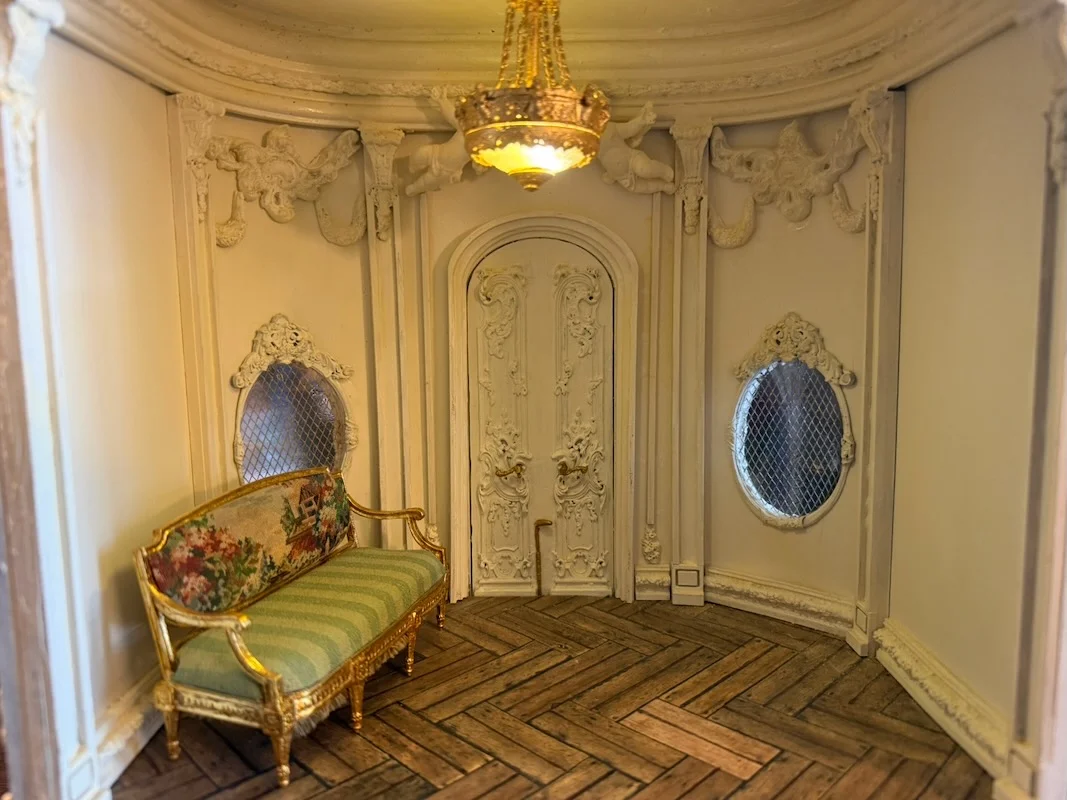
The room box’s finishing touches bring its practical construction and decorative details together. The lower door conceals most of the electrical setup, while a chandelier assembled from 3D-printed parts, gold leaf and small hanging chains gives the interior a carefully made focal point. The maker considers the piece essentially complete and has placed it on display at home, with a few more additions still planned.
Exterior and interior views
The project is presented first from the outside, then through a series of interior views. That sequence offers a useful way to appreciate a room box as both a miniature scene and a constructed object: the exterior frames the display, while the interior reveals the details that give the room its character.
The maker describes this as a long-finished-at-last moment: “I finally finished this piece!” The wording carries the satisfaction of completing a project while leaving room for the small adjustments that often continue after a display is already in place. Here, the room is considered essentially done, though its maker expects to add a few more bits and pieces.
Exterior:

Interior


Lighting with the wiring tucked away
One of the more considered decisions is where the electrical components sit. A lower door hides the wiring, leaving the lead wire as the visible connection to the transformer. The arrangement is straightforward: one line runs through a switch to an LED in the chandelier, and the outgoing lead connects to a transformer that plugs into the wall.
For a miniature display, that setup gives the room its light without making the mechanism the main event. The access door also means the components have a defined place within the build. The maker’s description keeps the details clear: the door covers the electrical equipment, but the lead wire still has to come out so the transformer can connect.
This view shows the lower door that hides the electricity, apart from the lead wire. The electrical setup is one line with a switch and an LED in the chandelier; the outgoing line connects to a transformer plugged into the wall.
A chandelier assembled by hand
The chandelier began with 3D printing, but the finished piece required several hands-on steps. The maker applied gold leaf, glued the parts together and attached the small chains to their hooks. That sequence turns a printed starting point into a more elaborate fixture, with the finish and suspended details added through patient bench work.
Small hanging chains can be awkward to position, and the maker credits round-nose pliers and thin needle-nose pliers as especially helpful tools. That detail says a lot about the scale of the task: assembly depends on being able to grip and guide small components with control. For hobbyists working on comparable miniature fittings, the practical takeaway is specific to this build—the right pliers made it easier to handle these chains and hooks.

A settee that found its place
The settee was purchased from June at a show a few years ago. It wasn’t acquired specifically for this finished room: the maker realized only after completing the interior that it would suit the space. That kind of late match can be part of the pleasure of collecting miniature furnishings. A piece kept from an earlier outing may eventually find the right setting as a room comes together.
The settee’s arrival also gives the interior a link to the maker’s collecting history. Its place in the room emerged through looking at the completed space, rather than following a fixed furnishing plan. The result is a reminder that finishing a miniature scene can involve revisiting pieces already owned and seeing them differently.
Finished for display, open to small additions
The room box now lives on display in the maker’s home, where it can be enjoyed as a complete piece. There may be a few more additions, but the main work is finished. The lighting functions, the chandelier has been assembled and decorated, and the settee has found a natural home in the interior.
That balance between completion and the possibility of a final detail feels true to miniature work. A display can be ready to share even when its maker still sees room for a small addition. For this Chateau / Folly interior, the concrete takeaway is a finished room box that brings together careful ornament, a simple lighting arrangement and a settee chosen once the room’s character became clear.